

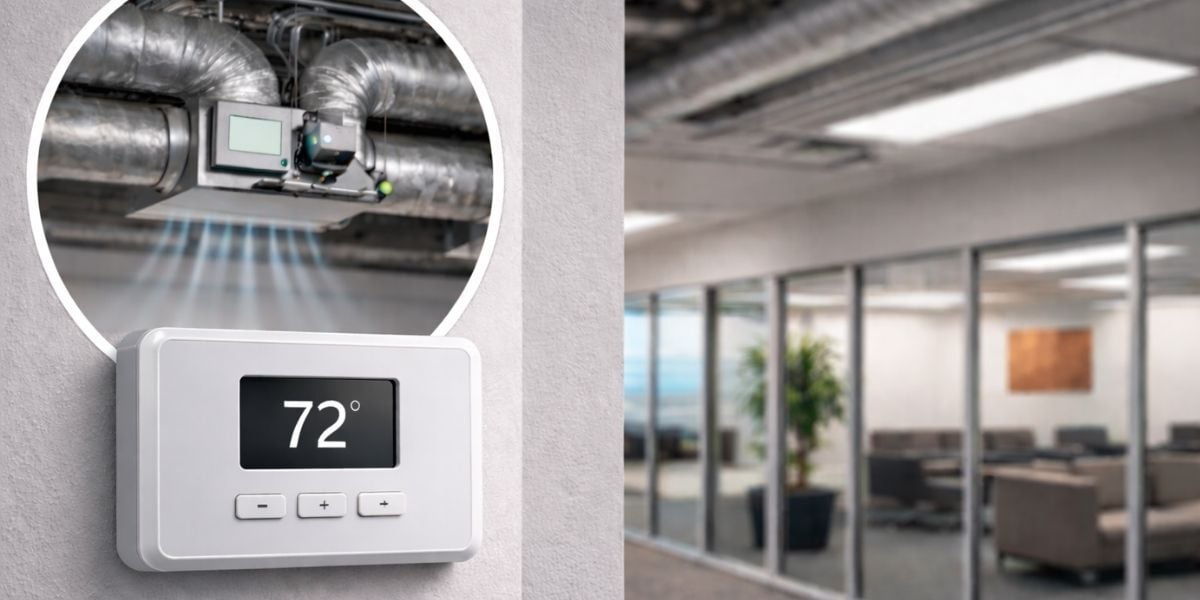
You adjust the thermostat in one area of your building, expecting the temperature to change, but nothing happens. Meanwhile, other parts of the building feel comfortable. This can leave facility managers wondering why certain HVAC zones are not responding.
In commercial buildings, HVAC zoning is designed to keep different spaces, such as offices, conference rooms, and retail areas, comfortable by controlling each zone separately. When the system works properly, temperatures stay balanced throughout the building.
At Harold Brothers Mechanical Contractors, we often help facility managers troubleshoot zoning issues like this. In many cases, the problem comes down to a component that is not communicating correctly within the system.
In this article, you’ll learn how commercial HVAC zoning works, why zones may stop responding to thermostat changes, and what steps you can take to resolve the issue.
What Is an HVAC Zoning System in a Commercial Building?
%20(15).jpg?width=247&height=330&name=Untitled%20(768%20x%201024%20px)%20(15).jpg) A commercial HVAC zoning system divides a building into multiple temperature-controlled areas called zones.
A commercial HVAC zoning system divides a building into multiple temperature-controlled areas called zones.
Each zone is managed by its own thermostat, sensor, or building management control point, allowing different areas to maintain temperatures based on occupancy, usage, or time of day.
Instead of distributing conditioned air evenly throughout the entire building, the HVAC system directs airflow only to zones that need heating or cooling.
Thermostats or sensors communicate with a zoning control panel or building management system, which opens or closes dampers in the ductwork to direct airflow where it’s needed.
If any part of this process fails, the affected zone may stop responding to temperature changes.
Common Reasons HVAC Zones Do Not Respond to Thermostat Changes
Several issues can cause a commercial HVAC zone to stop responding to thermostat adjustments. Most problems fall into a few common categories.
1. Thermostat or Sensor Failure
In commercial systems, zones may use wall-mounted thermostats, temperature sensors, or digital control interfaces connected to a building automation system.
If the thermostat or sensor fails, the HVAC system may no longer receive accurate temperature readings or commands.
This can cause the system to ignore adjustments made by building occupants or facility staff. The display may still appear functional, but the system may not react.
Replacing or recalibrating a faulty thermostat or sensor often resolves the issue.
2. Incorrect Thermostat or Building Management Settings
%20(18).jpg?width=288&height=384&name=Untitled%20(768%20x%201024%20px)%20(18).jpg) Commercial HVAC systems often rely on programmed schedules or building management software.
Commercial HVAC systems often rely on programmed schedules or building management software.
If the system schedule overrides manual adjustments, the thermostat may appear unresponsive. For example, the system may revert to a programmed temperature after a short period.
Incorrect zone configuration, operating mode errors, or software settings within the building management system can also prevent zones from responding.
Reviewing system schedules and building management settings can help identify configuration problems.
3. A Stuck or Malfunctioning Zone Damper
Zone dampers are mechanical devices installed inside ductwork that regulate airflow to different areas of a building.
When a thermostat calls for heating or cooling, the damper for that zone opens to allow air to pass through.
If a damper becomes stuck, damaged, or its actuator motor fails, airflow may not reach that zone even though the thermostat is calling for heating or cooling.
Over time, dust buildup, mechanical wear, or electrical faults can prevent dampers from operating properly.
When dampers fail, the HVAC system cannot deliver conditioned air to the affected zone.
4. Wiring or Communication Problems
Commercial HVAC zoning systems rely on communication between thermostats, control boards, dampers, and the HVAC equipment.
If wiring becomes loose, damaged, or disconnected, the signal from the thermostat may never reach the system.
In buildings that use digital control networks or building management systems, communication failures between devices can also prevent zones from responding correctly.
These problems can be difficult to diagnose without specialized equipment.
An HVAC technician may need to test the system wiring or network connections to locate the issue.
5. A Faulty Zoning Control Panel or Building Management System
%20(17).jpg?width=304&height=405&name=Untitled%20(768%20x%201024%20px)%20(17).jpg) The zoning control panel or building management system acts as the central control point for commercial HVAC zones.
The zoning control panel or building management system acts as the central control point for commercial HVAC zones.
It receives signals from thermostats or sensors and directs dampers and HVAC equipment accordingly.
If the control panel malfunctions, multiple zones may stop responding, operate at the wrong times, or fail to regulate temperature properly.
Electrical issues, power surges, aging equipment, or software faults can all cause control system failures.
When the control system stops functioning properly, the entire zoning system can become unreliable.
6. Airflow Problems in the Duct System
Sometimes the thermostat and zoning system are working correctly, but airflow restrictions prevent the zone from reaching the desired temperature.
In commercial buildings, airflow issues may be caused by blocked supply vents, closed dampers, dirty filters, or duct leaks.
Large buildings may also experience pressure imbalances within the duct system, especially if equipment or layouts have changed over time.
When airflow is restricted, the system cannot deliver enough conditioned air to regulate the temperature in that zone.
Proper airflow is essential for commercial zoning systems to perform effectively.
7. Poor HVAC Zoning Design or System Modifications
%20(16).jpg?width=312&height=416&name=Untitled%20(768%20x%201024%20px)%20(16).jpg) Many commercial buildings undergo renovations, layout changes, or occupancy adjustments over time.
Many commercial buildings undergo renovations, layout changes, or occupancy adjustments over time.
If the HVAC zoning system was not designed for the building’s current layout, certain zones may struggle to maintain consistent temperatures.
For example, offices may be converted into conference rooms, storage spaces, or retail areas that require different heating and cooling demands.
In other cases, the HVAC equipment may not be properly sized for the zoning configuration.
Poor zoning design can cause certain areas of the building to ignore thermostat adjustments or experience uneven temperatures.
Signs Your Commercial HVAC Zone Is Not Working Properly
Facility managers and building occupants may notice several signs when a zone stops responding to thermostat changes.
One common sign is that a specific office, floor, or area stays too hot or too cold despite thermostat adjustments. The thermostat may appear to function normally, but the temperature never changes.
Another warning sign is weak airflow from vents in that zone or a system that runs continuously without correcting the temperature.
In some cases, employee or tenant complaints may increase as comfort problems persist.
These symptoms usually indicate that the HVAC zoning system requires inspection.
When Should You Call an HVAC Professional?
%20(14).jpg?width=321&height=428&name=Untitled%20(768%20x%201024%20px)%20(14).jpg) Some zoning problems can be simple, such as correcting thermostat schedules or replacing a faulty sensor.
Some zoning problems can be simple, such as correcting thermostat schedules or replacing a faulty sensor.- However, commercial HVAC systems often include complex components like zoning control panels, damper actuators, and building automation systems.
- If multiple zones are not responding, the system behaves unpredictably, or comfort problems continue, it is best to have the system inspected by an HVAC professional.
- A qualified technician can test dampers, sensors, wiring, and airflow to identify the root cause of the issue.
- Addressing zoning problems early can prevent larger HVAC repairs, reduce energy waste, and maintain a comfortable environment for building occupants.
What to Do When HVAC Zones Stop Responding in Your Commercial Building
Dealing with HVAC zones that do not respond to thermostat changes in a commercial building can be frustrating. A properly functioning zoning system is essential for maintaining comfort throughout the building.
If the problem continues, a professional HVAC inspection can help identify the root cause and prevent it from affecting other areas of the system. At Harold Brothers Mechanical, we work with facility managers and business owners to diagnose and resolve commercial HVAC zoning issues, helping ensure systems operate efficiently and reliably.
Your next step is to read our article “Temperature Swing Fix: Zoning vs Controls vs Sensors,” where we explain the three main ways temperature swings are typically corrected in commercial HVAC systems and how to determine which solution may be right for your building.
