
If you’re being honest, reactive service doesn’t feel like a bad approach when everything is working.
Your building is comfortable, tenants aren’t complaining, and nothing is forcing you to spend money. So it’s easy to think, “Why fix what isn’t broken?”
At Harold Brothers, we have seen hundreds of owners fall into that mindset. Since we are often the ones putting the system in at the start, we see this especially when equipment is newer. You can go a year or two without anything major happening, and it reinforces the idea that you’re making the right call.
But here’s what’s really going on behind the scenes.
Commercial HVAC and plumbing systems don’t fail all at once. They wear down gradually. Parts get dirty, components loosen, efficiency drops, none of it is obvious in the moment. The system keeps running, so it feels like everything is fine.
What you’re actually doing in a reactive model isn’t avoiding problems. You’re just letting them build quietly until they’re big enough that you can’t ignore them anymore.
Why Reactive HVAC and Plumbing Service Fails
Reactive service fails because it only responds after damage has already happened.
The easiest way to think about it is your health. You don’t wait until you have chest pain to start taking care of yourself. You go for yearly checkups because you want to catch issues early, when they’re still manageable.
Your building works the same way.
When you skip maintenance, you’re essentially saying, “We’ll deal with it when something goes wrong.” The problem is, by the time something goes wrong, it’s already past the point of being a small fix.
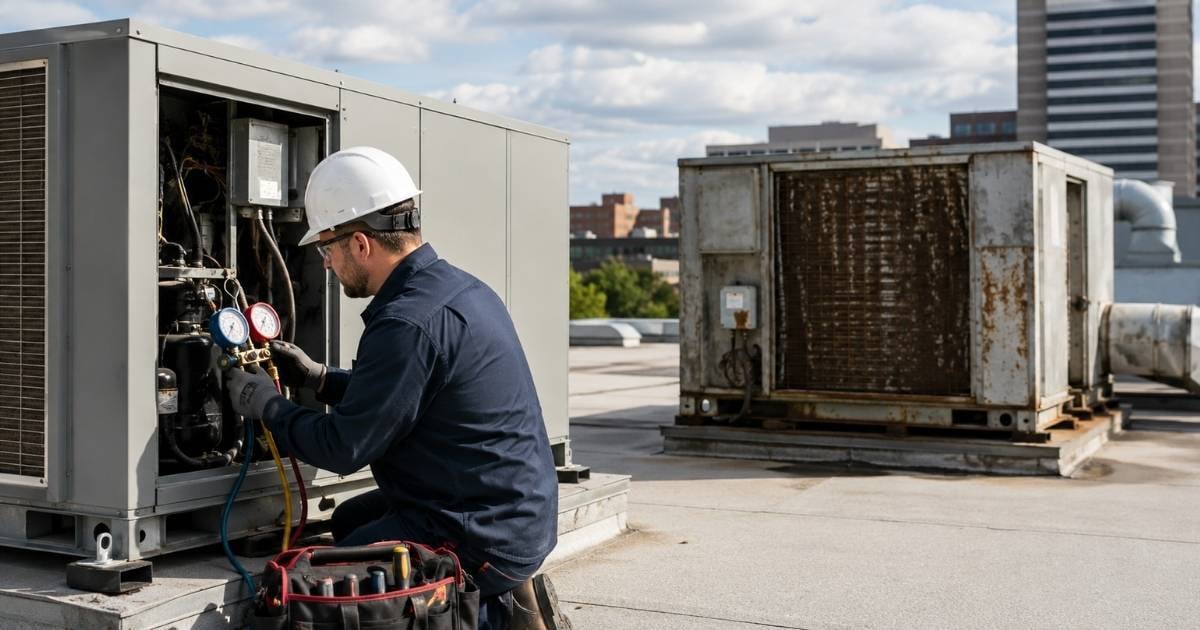
A dirty coil doesn’t seem like a big deal at first, but it forces the system to work harder every day. A worn belt doesn’t stop the system immediately, but it’s only a matter of time before it does. A small leak might go unnoticed for weeks, and then suddenly you’re dealing with damage that could have been avoided.
Reactive service doesn’t break down slowly in a way you can manage. It hits you when you need the system the most, during peak heating or cooling, and now you’re dealing with urgency, cost, and disruption all at once.

The Top 5 Things You’re Missing Without Preventative Maintenance
This is where most building owners underestimate the impact. Skipping maintenance isn’t just skipping a routine service; it means you’re missing the things that actually keep your building running the way it should.
1. Early Problem Detection
Most major issues start small. Maintenance gives you a chance to catch them early, before they turn into expensive repairs or full system failures.
2. Energy Efficiency
When systems are clean and properly adjusted, they run more efficiently. Without that, they slowly start using more energy just to keep up, which shows up in your utility bills over time.
3. Predictable Costs
Reactive service is unpredictable by nature. One month is quiet, the next you’re dealing with an emergency. Maintenance gives you consistency so you can plan instead of react.
4. Equipment Lifespan
This is one of the biggest differences. With proper maintenance, a commercial system might last 15 to 20 years. Without it, you could be looking at replacement closer to 10. That’s a major expense showing up much sooner than expected.
5. Control Over Your Building
Without maintenance, you’re always reacting to problems. With it, you’re managing your systems. That shift alone changes how your building operates day to day.
What Reactive HVAC Service Actually Costs You Over Time
At first glance, reactive service seems like the cheaper option because you’re not paying for ongoing maintenance.
But the real cost doesn’t show up all at once, it builds over time.
You end up paying more for emergency repairs because they’re urgent and unplanned. Downtime starts to affect tenants and operations, which can lead to complaints or lost business. Systems that aren’t maintained use more energy, so your monthly costs creep up without a clear reason.
And then there’s the big one: equipment failure.
When a system fails years earlier than it should have, you’re not just paying for a repair anymore. You’re dealing with replacement costs that could have been delayed with proper care.
Individually, these issues might not seem overwhelming. But when you look at them over several years, it becomes clear that reactive service isn’t saving money. It’s just spreading the cost out in a less predictable and more expensive way.
What a Smarter HVAC Approach Looks Like
Preventative maintenance isn’t complicated, and it’s not about over-servicing your building.
It’s about being consistent.
You’re checking systems on a regular schedule, making small adjustments, and addressing minor issues before they turn into major ones. Instead of waiting for something to break, you’re staying ahead of it.
Over time, that changes how your building performs. You have fewer emergencies, your systems run more efficiently, and your equipment lasts longer.
More importantly, you’re no longer in a position where every problem feels urgent.
You have a plan, and that gives you control.
The Real Cost of Waiting Until Something Breaks
Reactive HVAC and plumbing service doesn’t fail because your systems are unreliable.
It fails because waiting for problems allows damage to build until it becomes unavoidable.
When you take a reactive approach, you’re accepting higher costs, more disruption, and shorter equipment life. When you shift to preventative maintenance, you’re doing the opposite, you’re protecting your systems, your budget, and your building as a whole.
At Harold Brothers, we have had this conversation a thousand times. At the end of the day, it’s the same idea as taking care of your health. The earlier you catch problems, the easier and less expensive they are to fix.
If you’re trying to better understand how preventative maintenance responsibilities are typically handled in commercial buildings, your next step should be reading our article on tenant HVAC maintenance responsibilities and how maintenance planning impacts long-term building performance.
And over time, that’s what makes the difference between a system that lasts 10 years and one that lasts 20.