
If you manage a commercial building, you probably know the stress of an emergency HVAC repair call. These breakdowns rarely happen at a good time. They usually occur during extreme heat or cold, when systems are working their hardest, occupants are uncomfortable, and fast decisions are required. Downtime, tenant complaints, and higher repair costs often follow.
At Harold Brothers, we’ve worked with hundreds of facility managers across Massachusetts and New England. Over the years, we’ve seen how preventative maintenance (PM) contracts can significantly reduce emergency HVAC calls. We’ve also seen confusion about what PM contracts can realistically prevent and where their limits are.
In this article, you’ll learn how a preventative maintenance contract helps reduce emergency HVAC repair calls, what it cannot prevent, and how to decide if it’s the right fit for your building.
Why Do Commercial HVAC Systems Need Emergency Repairs?
Most emergency HVAC failures are not sudden or random. In many cases, they are the result of small issues that develop slowly over time, including:
- Components wearing beyond safe operating limits
- Restricted airflow from dirty coils or clogged filters
- Electrical connections loosening or overheating
- Sensors and controls drifting out of calibration
- Minor leaks or drainage issues left unresolved
These problems rarely cause immediate shutdowns. Instead, they quietly reduce system capacity and reliability. When the system is finally pushed to its limit, usually during a heat wave or cold snap, it fails.
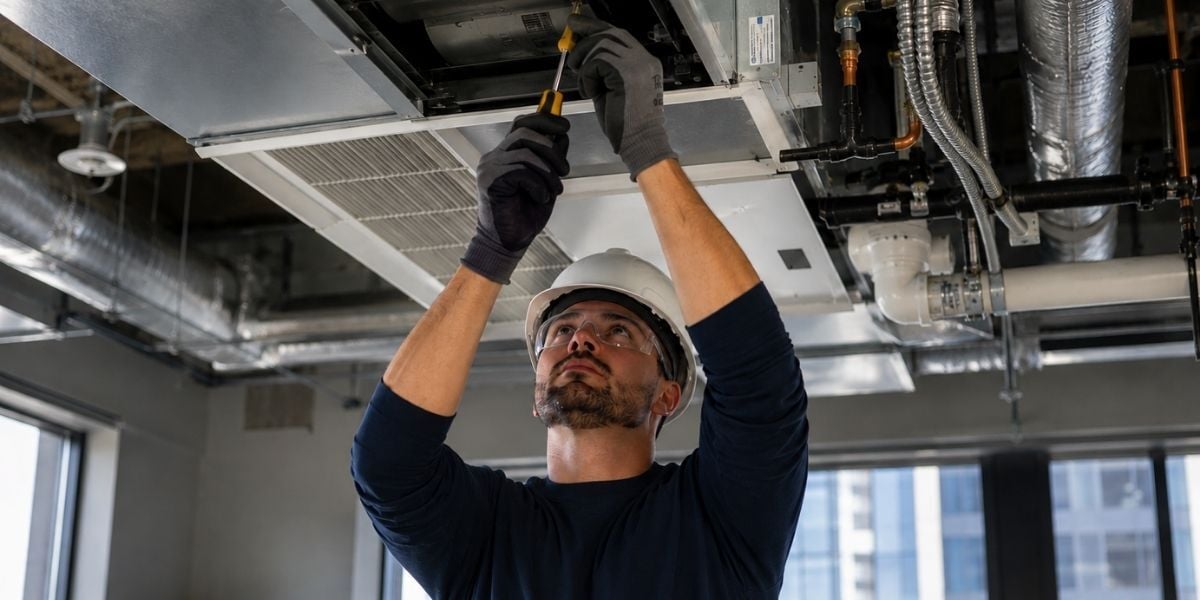
We see this often during routine maintenance visits. In one scheduled inspection, a technician found filters so dirty that airflow was heavily restricted. Because the issue was caught early, it was corrected before it caused overheating, nuisance shutdowns, or a mid-summer emergency call.
A preventative maintenance contract is designed to catch and correct these problems before they turn into emergencies.
How a Preventative Maintenance Contract Reduces Emergency Calls
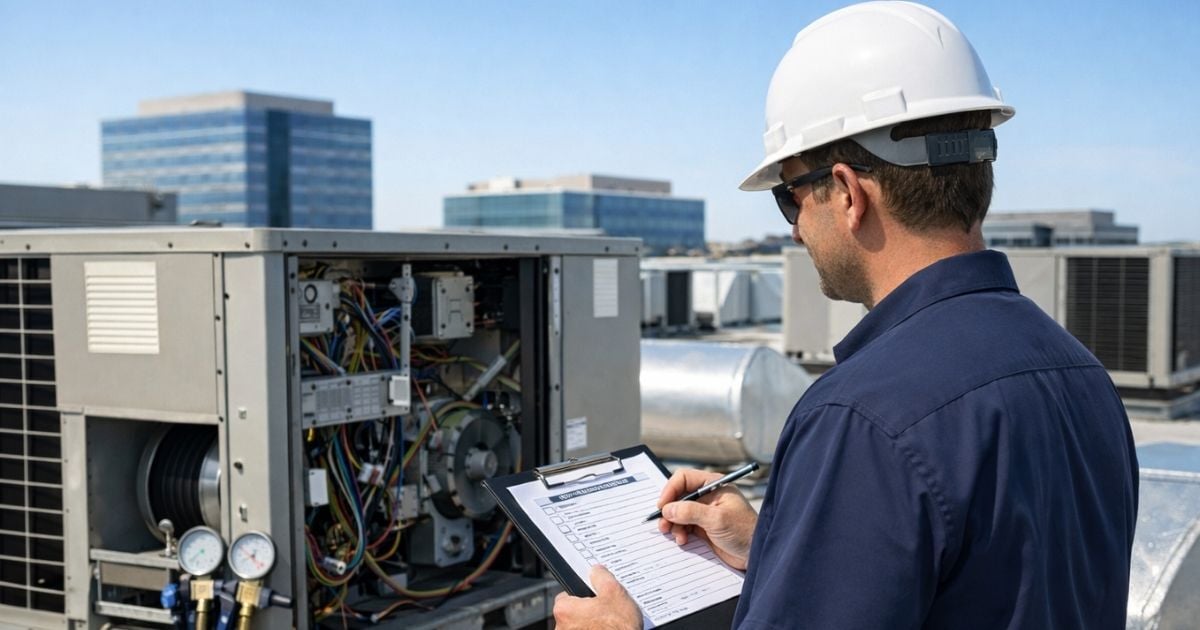
Preventative maintenance inspections focus on early warning signs while problems are still manageable. Technicians check electrical readings, airflow, mechanical wear, and control operation to spot issues before failure occurs.
By addressing these findings early, many of the most common emergency HVAC failures can be avoided.
Catching Problems Before Peak Season
Many emergency cooling failures trace back to missed seasonal preparation. Without proper spring maintenance, systems enter summer already under stress. PM visits help prepare equipment for peak demand, reducing the risk of breakdowns when temperatures rise.
Improved System Stability During Peak Conditions
Emergency calls happen most often when systems are running at or near full capacity. Equipment that is clean, calibrated, and properly adjusted is far less likely to fail under those conditions.
During a recent maintenance visit to a mixed-use commercial building, multiple ducted indoor units were found operating without proper filters. While the systems were still running, unfiltered air had already started contaminating the coils. Issues like this don’t trigger alarms right away, but they greatly increase the risk of shutdown during extreme weather.
Preventative maintenance helps ensure systems can handle seasonal demand without being pushed beyond their limits.
Clean, well-maintained equipment also runs more efficiently, lowering utility costs. Many facilities see reduced energy use once airflow, controls, and heat transfer surfaces are properly maintained.
Fewer Surprises and Better Planning
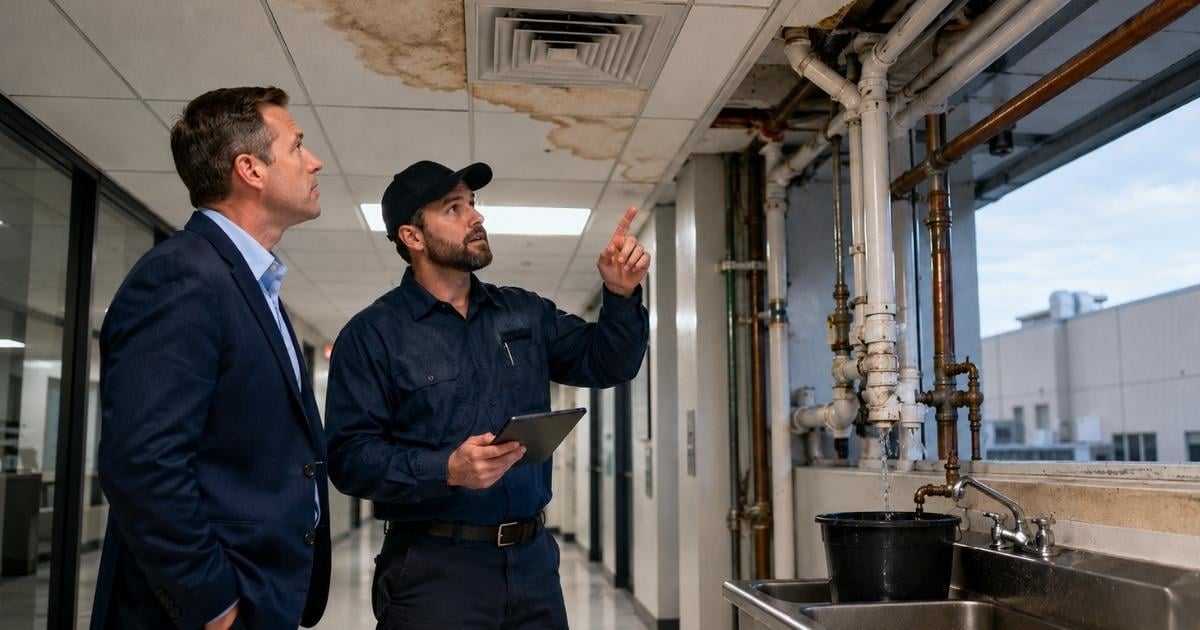
A PM program provides documented findings and clear recommendations. Instead of reacting to unexpected breakdowns, facility teams can plan repairs in advance.
Maintenance visits often uncover issues that slow response during emergencies, such as blocked thermostats, poor equipment access, or unclear control labeling. Identifying and fixing these problems during routine visits helps prevent delays when fast action matters most.
Over time, a PM program creates predictability. Knowing what maintenance is performed and when helps teams budget, schedule repairs, and avoid last-minute decisions under pressure.
What a PM Contract Does Not Do
Preventative maintenance is important, but it is not a guarantee. Understanding its limits is critical.
It Does Not Eliminate All Emergency Repairs
Some failures cannot be predicted, including sudden electronic failures, power issues, or manufacturer defects. PM greatly reduces risk, but emergencies can still happen.
It Does Not Reverse Equipment Age
Maintenance improves reliability, but it does not make old equipment new again. Systems that are past their expected service life remain more likely to fail, even with regular maintenance.
In some inspections, equipment is found in only fair condition due to years of inconsistent upkeep. While PM can’t undo past neglect, it does establish a baseline and prevents further deterioration from going unnoticed.
It Does Not Automatically Include Repairs or Parts
Most PM contracts focus on inspections, cleaning, testing, and documentation. Repairs and parts replacement are usually handled separately to keep maintenance agreements clear and cost-effective.
When a PM Contract May Not Be the Right Fit
Preventative maintenance is not ideal for every facility.
Buildings That Only Want On Demand Emergency Service
If the strategy is strictly reactive and calling only when something breaks, a PM contract may feel unnecessary. However, this approach often leads to higher long-term costs, longer downtime, and more disruptive failures.
Facilities Without Budget Flexibility for Repairs
PM programs often identify recommended repairs before failure occurs. If there is no ability to act on those recommendations, the value of maintenance is reduced.
Sites With Major Design or Installation Limitations
Maintenance improves performance and reliability, but it cannot fully correct improper system sizing, poor zoning, or fundamental design flaws.
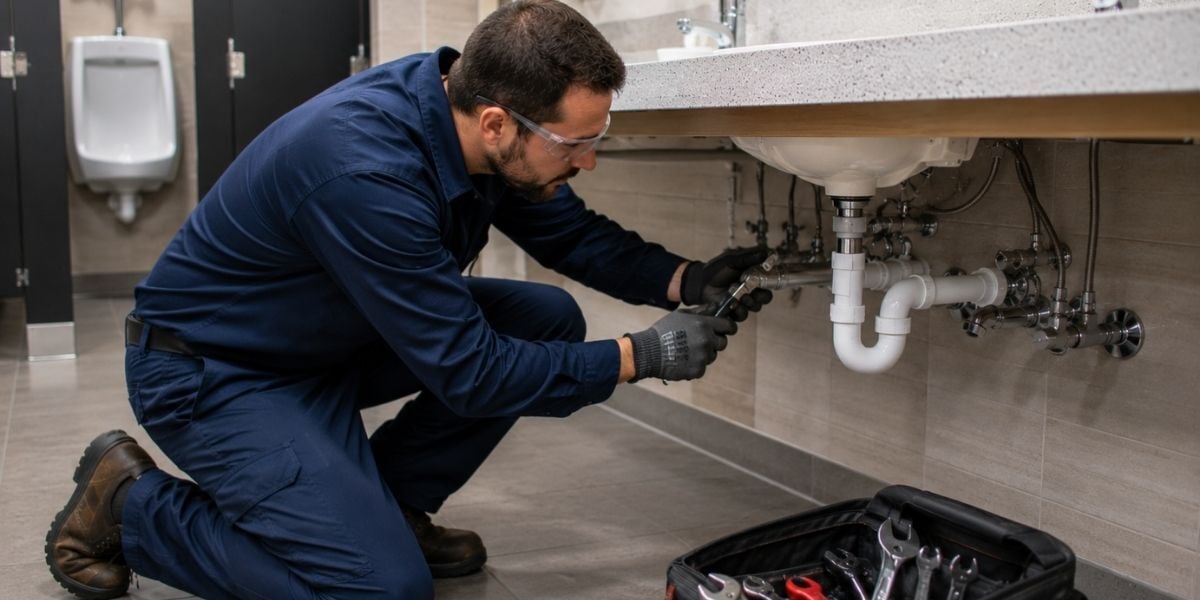
While some facilities rely on reactive service, the long-term consequences are rarely limited to HVAC alone. The same patterns show up in plumbing systems, where the risks of skipping preventative maintenance altogether often lead to higher emergency costs.
Preventative Maintenance vs Reactive HVAC Service
|
Preventative Maintenance (PM Contract) |
Reactive Emergency Only Service |
|
Issues identified early |
Problems discovered after failure |
|
Planned repairs and scheduling |
Urgent repairs under pressure |
|
Lower risk of major system failures |
Higher likelihood of severe breakdowns |
|
Predictable maintenance costs |
Unpredictable emergency expenses |
|
Shorter downtime when issues occur |
Extended downtime during failures |
|
Better documentation and system visibility |
Limited system history |
Do Emergency Repairs Still Happen With Preventative Maintenance?

They can, but they are usually less severe, easier to diagnose, and quicker to resolve.
With regular maintenance, systems are cleaner, documentation is available, and technicians understand the system history. When a problem does occur, that context reduces downtime and avoids unnecessary trial-and-error troubleshooting.
Beyond fewer emergencies, many facility managers also see financial benefits. Understanding the return on investment of preventative HVAC maintenance helps put maintenance costs in context.
Does a PM Contract Help Reduce Emergency HVAC Calls?
A preventative maintenance contract will not eliminate every emergency repair. What it does reduce is how often emergencies occur, how severe they become, and how disruptive they are to building operations.
Most emergency calls are triggered by issues like restricted airflow, dirty coils, failing sensors, or worn components, problems that develop slowly and can be identified early through routine maintenance.
If you want a clearer understanding of what is actually inspected, cleaned, and tested during a commercial HVAC maintenance visit, your next step is to read about what can happen when you skip some of the key components of HVAC maintenance. It will help you evaluate whether your current maintenance program covers what it should and what to expect from a qualified provider.
At Harold Brothers, we help facility managers reduce emergency calls, extend equipment life, and regain control of HVAC budgets. If you’re ready to move from reactive firefighting to proactive planning, our team is here to help you build the right preventative maintenance program for your building.

Topics: