
Many business owners think their plumbing system is in good shape if there are no leaks or clogged drains. However, commercial plumbing problems often develop slowly behind walls, above ceilings, or underground. When maintenance is inconsistent across a building, small issues can grow into expensive repairs and unexpected downtime.
At Harold Brothers Mechanical Contractors, we've helped businesses throughout Massachusetts, Rhode Island, and Southern New Hampshire solve plumbing problems that could have been prevented with regular maintenance. In many cases, the biggest issue wasn't a broken pipe; it was an inconsistent approach to maintaining the entire plumbing system.
In this article, you'll learn what inconsistent plumbing maintenance looks like, why it causes more repairs, and how a preventative maintenance plan can help keep your building running smoothly.
What Does Inconsistent Commercial Plumbing Maintenance Mean?
Inconsistent plumbing maintenance happens when some parts of a building receive regular service while others are ignored. Since every plumbing component works together, neglected equipment often becomes the weakest link in the system.
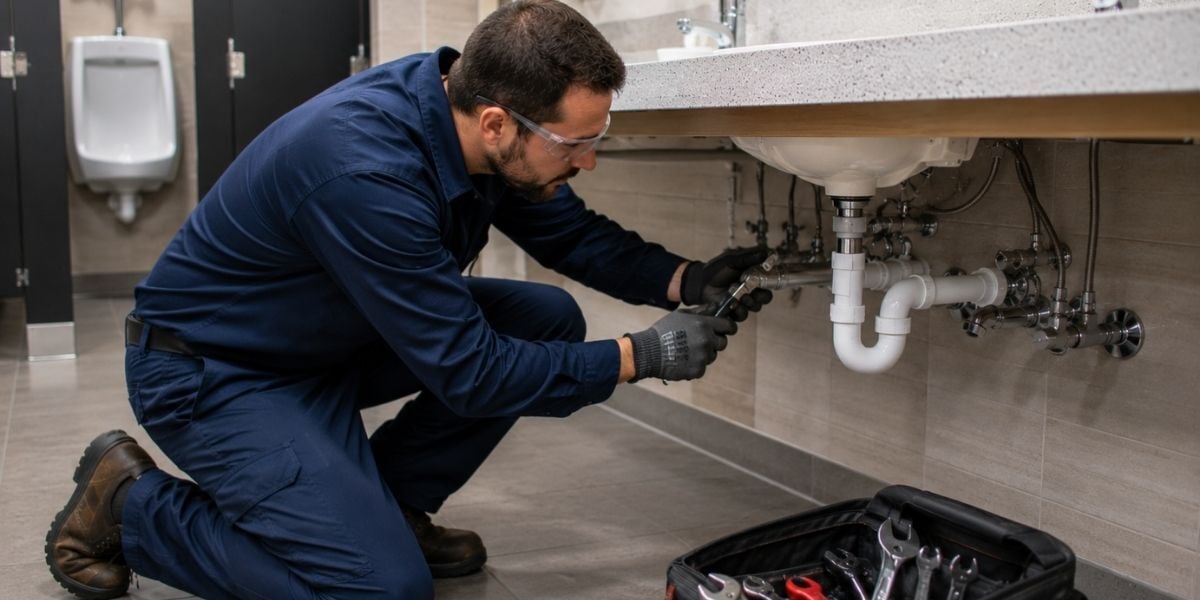
For example, a business may service its water heater every year but never inspect aging drain lines. Restroom fixtures may receive quick repairs while leaking valves or hidden piping go unchecked. Over time, these small gaps in maintenance create larger problems throughout the building.
Think of it like maintaining only two tires on a truck. The neglected tires wear out faster, eventually affecting the performance of the entire vehicle. Commercial plumbing systems work much the same way.

Which Plumbing Systems Are Most Often Overlooked?
Some plumbing components are easy to forget because they continue working until they suddenly fail.
Drain Piping
Drain lines slowly collect grease, scale, debris, and corrosion. Without periodic inspections or cleaning, they can lead to recurring drain backups and slow drainage throughout the building.
Isolation Valves
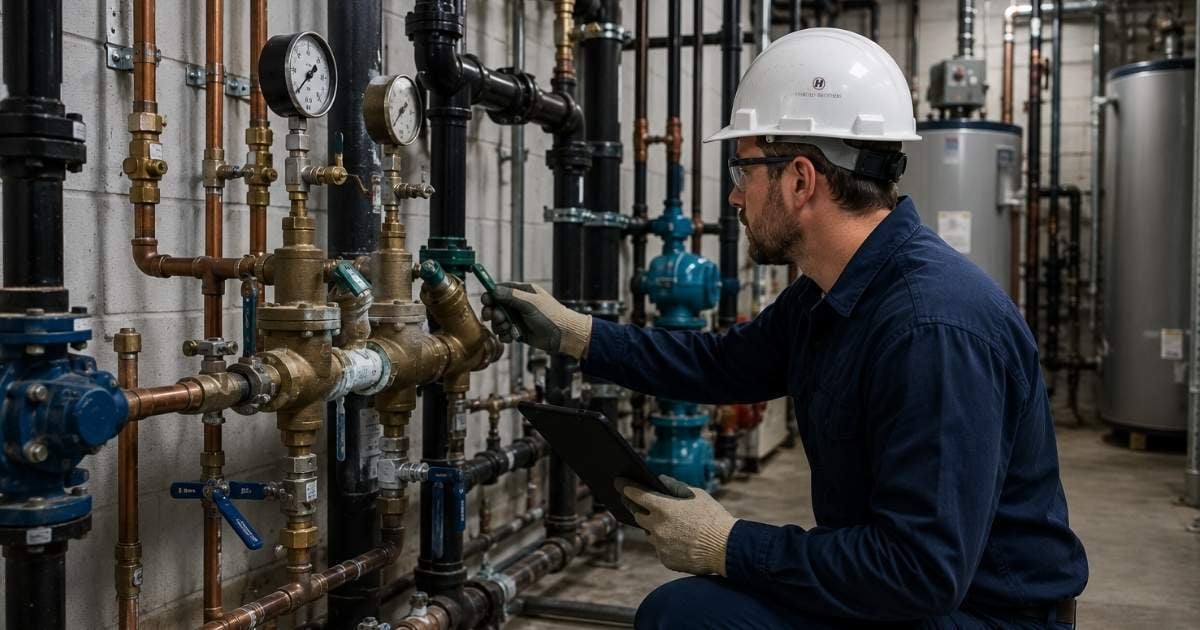
Isolation valves should be exercised regularly. If they sit untouched for years, they may seize or fail when you need to shut off water during an emergency repair.
Water Heaters
Commercial water heaters require routine flushing, safety inspections, and control checks. Skipping maintenance can reduce efficiency, increase energy costs, and shorten equipment life.
Pumps and Backflow Preventers
Booster pumps and backflow preventers often receive little attention until something goes wrong. Routine inspections help identify worn parts, pressure problems, or leaks before they interrupt building operations.
What Problems Can Inconsistent Plumbing Maintenance Cause?%20(83)-1.jpg?width=316&height=421&name=Untitled%20(768%20x%201024%20px)%20(83)-1.jpg)
Businesses that don't maintain their plumbing systems consistently often experience more repairs and higher operating costs.
More Water Leaks
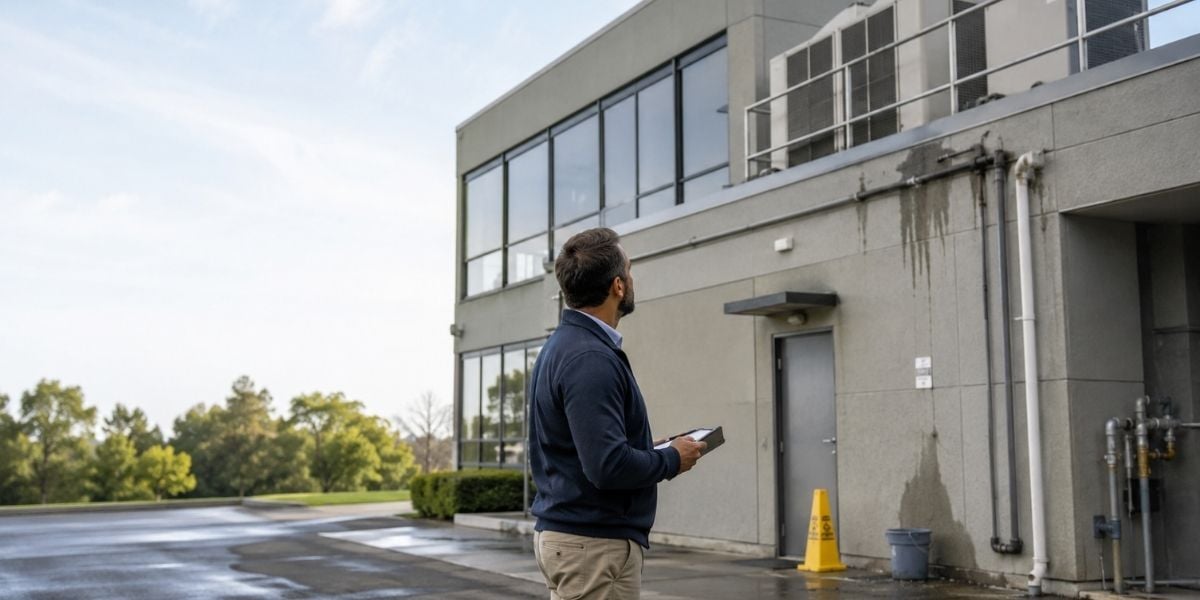
Small leaks around valves, fittings, or aging pipes rarely stay small. Left alone, they can damage ceilings, walls, flooring, and valuable equipment.
Frequent Drain Backups
Minor restrictions inside drain piping gradually become major blockages. Instead of scheduling routine maintenance, businesses end up dealing with emergency restroom closures and costly cleanup.
Higher Water Bills
Even small hidden leaks can waste thousands of gallons of water over time. Many businesses first notice a problem when utility bills begin climbing without an obvious reason.
Unexpected Equipment Failures
Pumps, water heaters, pressure regulators, and other plumbing equipment wear out naturally. Regular inspections often identify these problems before they become emergency repairs.
How Does Poor Plumbing Maintenance Affect Daily Operations?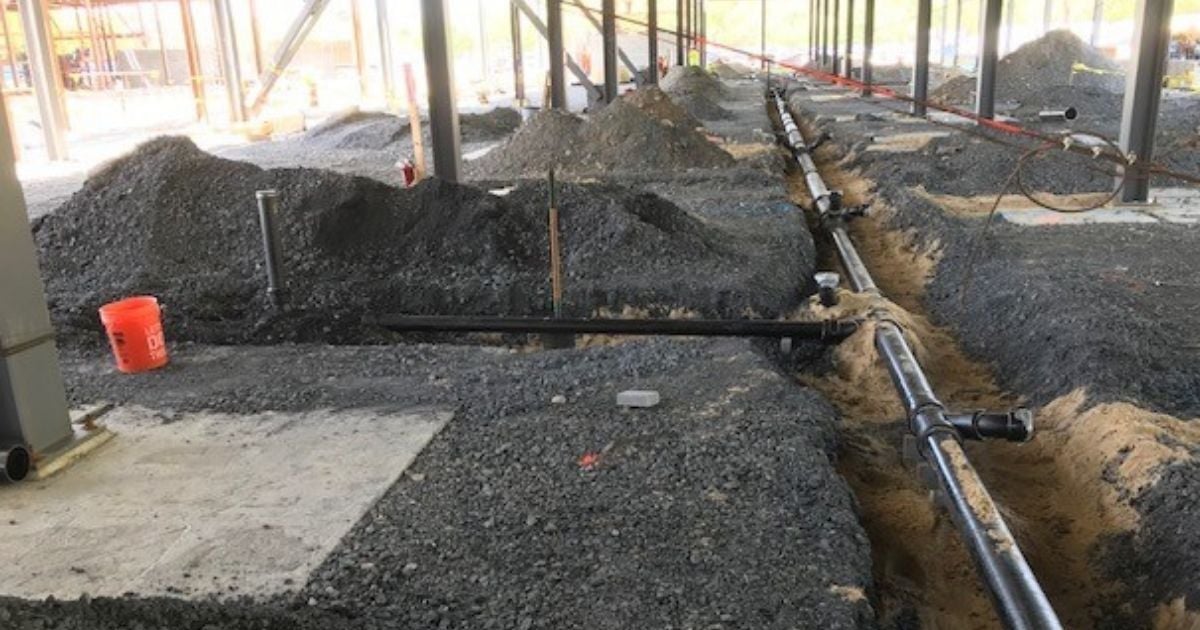
A plumbing failure rarely affects just one fixture. It can close restrooms, interrupt production, delay customer appointments, shut down kitchens, or inconvenience tenants and employees. In many cases, the disruption to normal business operations costs more than the plumbing repair itself.
When Small Repairs Hide a Bigger Problem
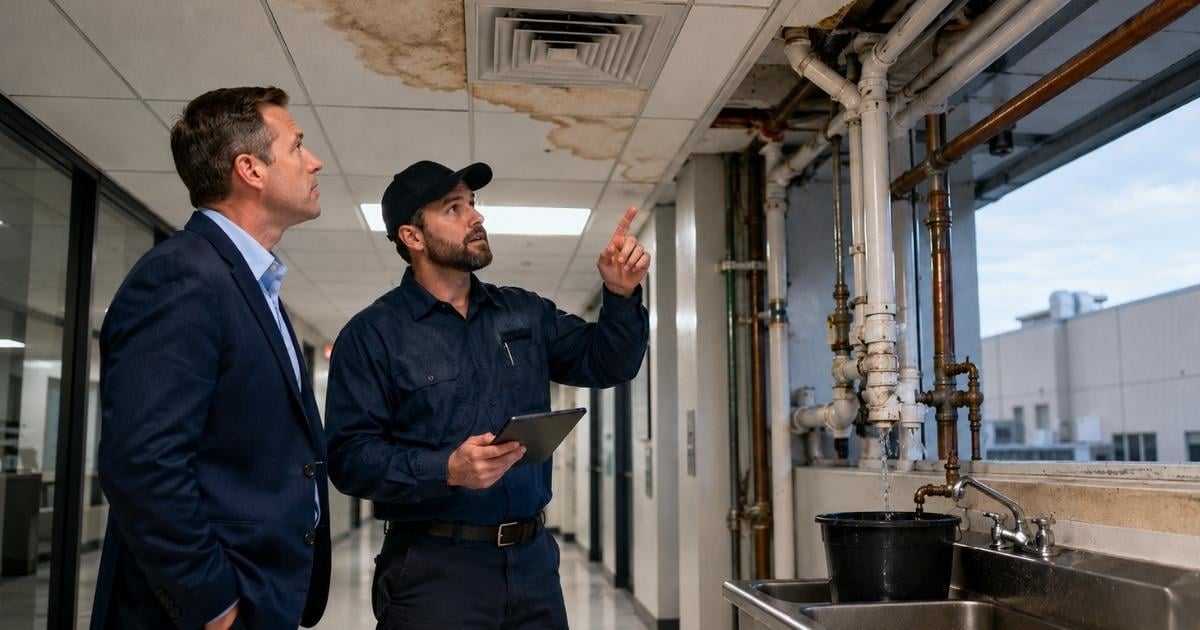
An office building contacted us because they had experienced several plumbing leaks over the past two years. Each leak was repaired as it appeared, but no one inspected the overall plumbing system.
When another leak developed above a conference room, a complete evaluation revealed that much of the original piping had reached the end of its service life. Instead of continuing to repair one leak at a time, the building owner scheduled a phased pipe replacement that reduced future emergency calls and improved system reliability.
The leaks weren't the real problem. They were warning signs that the entire plumbing system needed attention.
How Can Facility Managers Keep Plumbing Maintenance Consistent?
The best way to avoid recurring plumbing problems is with a preventative maintenance program that covers the entire plumbing system instead of only responding to emergencies.
A good maintenance plan includes regular inspections, leak detection, drain evaluations, water heater service, valve testing, pump inspections, and documentation that tracks the condition of your plumbing equipment. Finding small issues early is almost always less expensive than responding after a major failure.
When Should You Schedule a Commercial Plumbing Inspection?
If plumbing problems keep returning, water bills continue rising, or different parts of your building receive different levels of maintenance, it's time for a complete plumbing inspection.
You should also consider scheduling an evaluation if:
- The same plumbing repairs keep coming back.
- Drain backups happen more than once.
- Your building has aging plumbing equipment.
- Emergency plumbing calls are becoming more common.
Addressing these issues early can help reduce repair costs, extend equipment life, and minimize business disruptions.
Consistent Maintenance Protects Your Entire Plumbing System
The most expensive plumbing problems usually don't happen overnight. They develop slowly when parts of a commercial plumbing system receive regular attention while others are overlooked. A consistent maintenance plan helps catch small issues early, reduces emergency repairs, and keeps your building operating efficiently.
At Harold Brothers Mechanical Contractors, we help businesses take a proactive approach to commercial plumbing maintenance by evaluating the entire system—not just the equipment that's already broken. That approach helps lower long-term costs, reduce downtime, and improve reliability.
If your business often waits until something breaks before calling for service, your maintenance strategy may be costing more than you realize. Read Why Reactive HVAC & Plumbing Service Fails to learn why reactive repairs often lead to higher expenses, more disruptions, and shorter equipment life, and how a preventative approach can save money over time.

Topics: