
When plumbing problems keep recurring in your commercial building, it can feel like you are paying to fix the same issue over and over. A toilet backs up. A sink drains slowly. A pipe leaks. Your team cleans up the mess, calls a plumber, and hopes the problem is gone.
Then it happens again.
At Harold Brothers Mechanical, we know how frustrating repeat plumbing issues can be for building owners, property managers, and facility teams. When plumbing problems interrupt your day, your tenants, staff, and customers feel the impact too.
Commercial plumbing problems usually recur because the root cause was never fixed. The visible problem may be a clog, leak, or backup. The deeper cause could be old pipes, heavy use, grease buildup, poor pipe layout, high water pressure, or skipped maintenance.
In this article, you will learn why plumbing problems keep coming back and what you can do to stop them.
Plumbing Problems Come Back When Only the Symptom Is Fixed
Many plumbing repairs only fix what you can see right now.
A drain is clogged, so it needs to be cleared. A pipe is leaking, so it gets patched. A toilet is running, so a part needs to be replaced.
These repairs can help in the moment, but they may not solve the real issue.
For example, a drain may clog because grease is built up deep in the line. Clearing the first part of the pipe may get the water moving again. But if the grease is still farther down, the clog can return.
The same thing can happen with leaks. A small leak may be patched, but the pipe around it may still be weak. If the pipe is wearing out, another leak may show up nearby.
A quick fix can stop an emergency, but it may not stop the problem from coming back.
Heavy Use Wears Down Commercial Plumbing Systems
%20(63).jpg?width=363&height=484&name=Untitled%20(768%20x%201024%20px)%20(63).jpg) Commercial plumbing systems work much harder than home plumbing systems.
Commercial plumbing systems work much harder than home plumbing systems.
Office buildings, restaurants, schools, hotels, stores, and medical buildings may have hundreds of people using sinks, toilets, drains, and water lines every day.
That heavy use puts stress on the system.
A busy restroom may be used all day. A restaurant kitchen may send hot water, food waste, and grease through the drains for hours. A hotel may have showers, laundry, kitchens, and restrooms running at the same time.
Over time, parts wear out. Seals crack. Drains slow down. Toilets flush poorly. Faucets leak.
This does not always mean someone did something wrong. It often means the plumbing system is under constant pressure.
Old Pipes Can Cause Repeat Leaks and Clogs
Older commercial buildings often have older pipes. As pipes age, they can rust, crack, weaken, or collect buildup inside.
When pipes get narrow inside, water and waste cannot flow through them as easily. This can lead to frequent clogs and slow drains.
Old pipes can also cause repeated leaks. You may fix one leak, only to find another in the same area a few weeks later.
You may also notice lower water flow from faucets or fixtures. This can happen when mineral buildup or rust blocks the inside of the pipe. If the same part of your building keeps having plumbing problems, the pipe itself may be the issue.
Grease, Food, Paper, and Debris Can Build Up in Drains
%20(64).jpg?width=364&height=485&name=Untitled%20(768%20x%201024%20px)%20(64).jpg) Drain problems often return because the same materials keep entering the plumbing system.
Drain problems often return because the same materials keep entering the plumbing system.
In restaurants, grease is one of the biggest causes. Grease may go down the drain as a liquid, but it can cool and harden inside the pipe. Once it sticks, it catches food, dirt, and other debris. Over time, the pipe becomes smaller until a backup happens.
In office buildings, paper towels, wipes, and hygiene products can clog toilets and drain lines. Even items labeled “flushable” can cause problems in a commercial system.
In salons, hair can collect in drains. In warehouses or industrial buildings, dirt and debris can wash into floor drains. If the same materials keep going down the drain, the same plumbing problems will keep coming back.
High Water Pressure Can Damage Pipes and Fixtures
Strong water pressure may seem like a good thing, but pressure that is too high can damage your plumbing system.
High water pressure puts extra force on pipes, valves, faucets, toilets, and water heaters. Over time, this can cause leaks, running toilets, dripping faucets, and worn-out parts.
You may notice plumbing problems showing up in different areas of the building. One faucet leaks, then a toilet runs, then another pipe starts dripping.
High water pressure can make plumbing parts fail faster than they should. Checking and controlling water pressure can help protect your whole system.
Hidden Leaks Can Keep Causing Damage
%20(65)-1.jpg?width=359&height=479&name=Untitled%20(768%20x%201024%20px)%20(65)-1.jpg) Not every plumbing problem is easy to see.
Not every plumbing problem is easy to see.
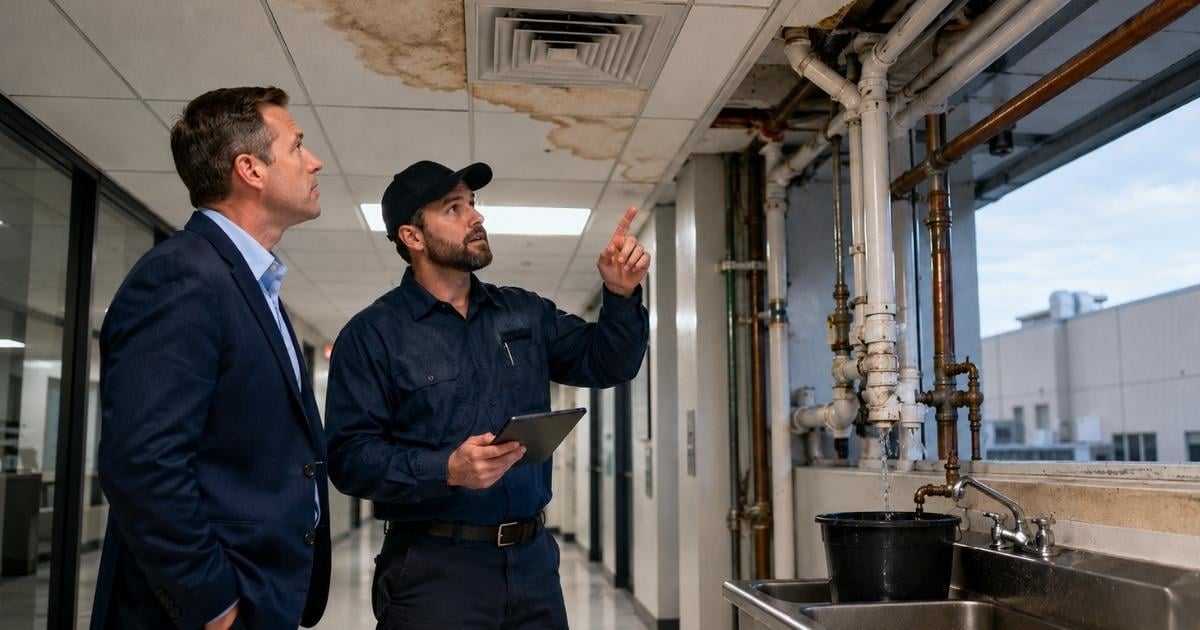
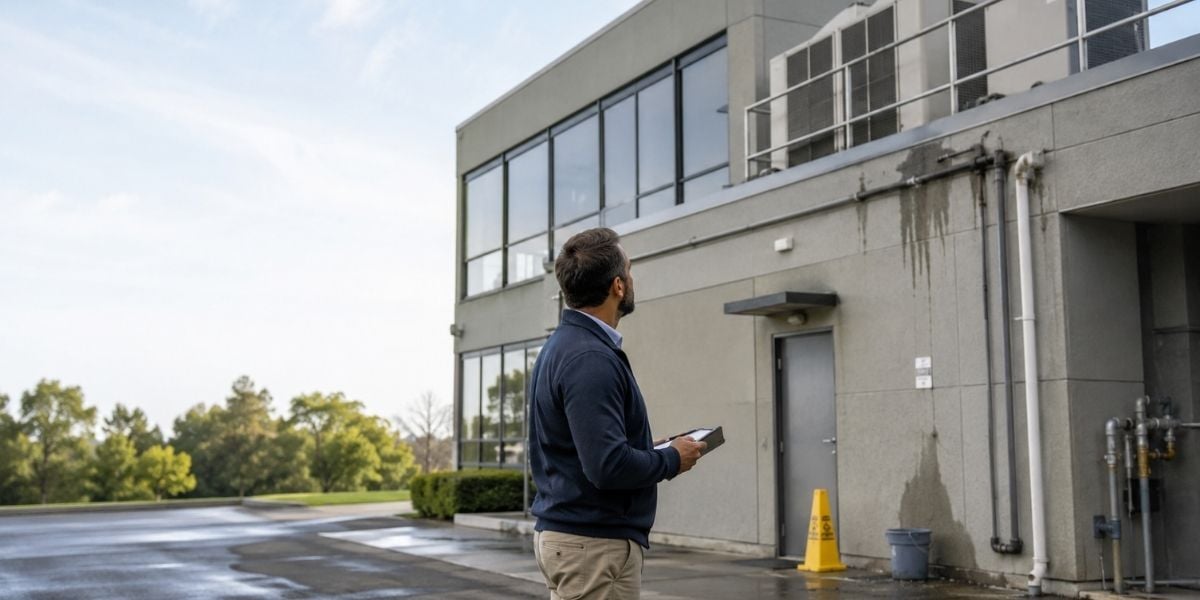
Some leaks happen behind walls, above ceilings, under floors, or in rooms that are not checked often. These hidden leaks can cause water stains, mold, soft flooring, musty smells, and higher water bills.
By the time you see the damage, the leak may have been active for weeks or months. Fixing the visible damage is not enough. Replacing a stained ceiling tile will not fix the leaking pipe above it.
If you see signs of water damage but cannot find the source, you may need a full leak inspection.
How Maintenance Helps Stop Recurring Plumbing Problems in Your Commercial Building
Many building owners wait until something breaks before calling a plumber. That may seem cheaper at first, but it often costs more over time.
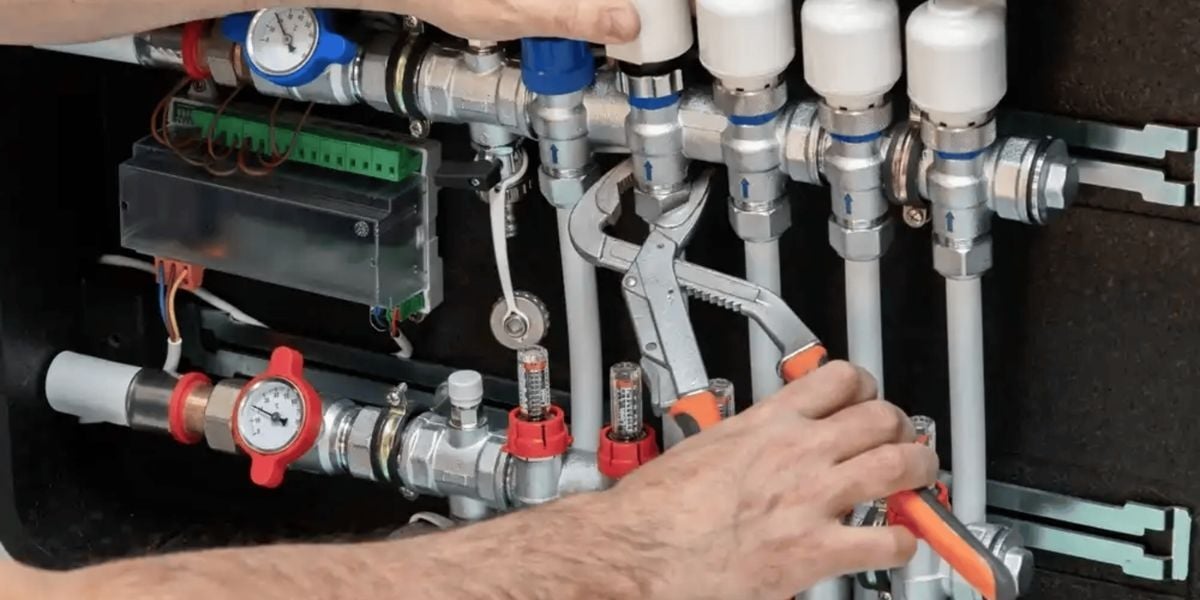
To stop repeat plumbing problems, you need to find the root cause, not just fix the latest clog, leak, or backup. Regular commercial plumbing maintenance helps catch small problems early. It may include checking water pressure, cleaning drains, inspecting pipes, testing shut-off valves, looking at water heaters, or using a camera to inspect drain lines.
Maintenance also helps you spot patterns. If the same restroom, kitchen, or floor drain keeps having trouble, that is a clue that something deeper is wrong.
Start by keeping records. Write down where the problem happened, when it happened, what was fixed, and whether it came back. If the same issue happens more than once, ask for a full inspection. This may include a camera inspection, water pressure test, leak check, or review of old pipes.
You should also train staff and tenants on what should not go down drains or toilets. Clear signs in restrooms and kitchens can help prevent clogs.
The goal of maintenance is to fix small plumbing issues before they shut down part of your building. If the same plumbing problem keeps coming back, the real cause is probably still there.
Repeat Plumbing Problems Are a Warning Sign
Now you know that recurring commercial plumbing problems often happen because of heavy use, old pipes, grease buildup, poor pipe layout, high water pressure, hidden leaks, or missed maintenance.
Schedule a full commercial plumbing inspection with Harold Brothers Mechanical. We help commercial building owners, property managers, and facility teams find the real cause of repeat plumbing problems, not just the latest symptom.
Your next step is to read our article, “Why Reactive HVAC and Plumbing Service Fails in Commercial Buildings.” This article will help you understand why waiting until something breaks often leads to higher costs, more downtime, and repeat service calls.
Topics: