
If you manage a commercial building, HVAC complaints probably sound familiar.
One tenant says their office is freezing in the morning. Another says it gets too hot every afternoon. Someone else complains about weak airflow or strange noises coming from the vents.
You check the thermostat. The system appears to be running normally, but the complaints keep coming.
This happens in many commercial buildings. HVAC systems will keep running, but their performance starts to decline. When that happens, comfort problems begin to appear long before the system fully breaks down.
At Harold Brothers Mechanical, we work with property managers and facility teams across New England. We often see how small changes in airflow, controls, or equipment condition can turn into comfort issues throughout a building.
In this article, we’ll explain why tenants often complain about HVAC systems in commercial buildings and what causes these problems to develop over time.
Why Are Temperatures Different in Various Areas of a Commercial Building?
Commercial buildings rarely heat and cool evenly; temperatures change throughout the day because of sunlight, occupancy, equipment, and outdoor weather.
For example, offices on the east side of a building may feel cool in the morning but warm up in the afternoon when the sun moves across the building. Conference rooms often get warm quickly when they fill with people and electronics.
Large open spaces may also receive airflow differently from smaller offices.
Because of these changing conditions, HVAC systems must constantly adjust to keep temperatures stable.
When everything is working properly, these adjustments happen quietly in the background.
But when airflow, sensors, or controls start drifting out of balance, certain areas of the building may become uncomfortable.
That is often when tenants begin calling with complaints.
What Causes Uneven Heating and Cooling in Commercial Buildings?
Many HVAC complaints start with small problems that slowly build up over time.
Air filters become clogged. Coils collect dirt. Drain lines gather debris. Electrical parts wear down. Sensors may slowly move out of calibration.
None of these problems will shut the system down right away.
Instead, they slowly reduce how well the HVAC system can control temperature and airflow throughout the building.
As performance drops, tenants may start noticing problems like:
- Temperatures change throughout the day
- Rooms that never reach the thermostat setting
- Weak or uneven airflow from vents
- HVAC equipment is running longer than normal
These issues may seem small at first, but they make comfort across the building less stable.
Tenants may not understand the mechanical cause, but they know when their workspace feels uncomfortable.
How Do Airflow Problems Cause HVAC Complaints in Commercial Buildings?
Uneven airflow is one of the most common reasons tenants complain about HVAC systems.
At Harold Brothers Mechanical, we recently worked with a facility manager who was dealing with this exact problem. One tenant said their office was always too warm, while another suite nearby complained that it felt cold all day.
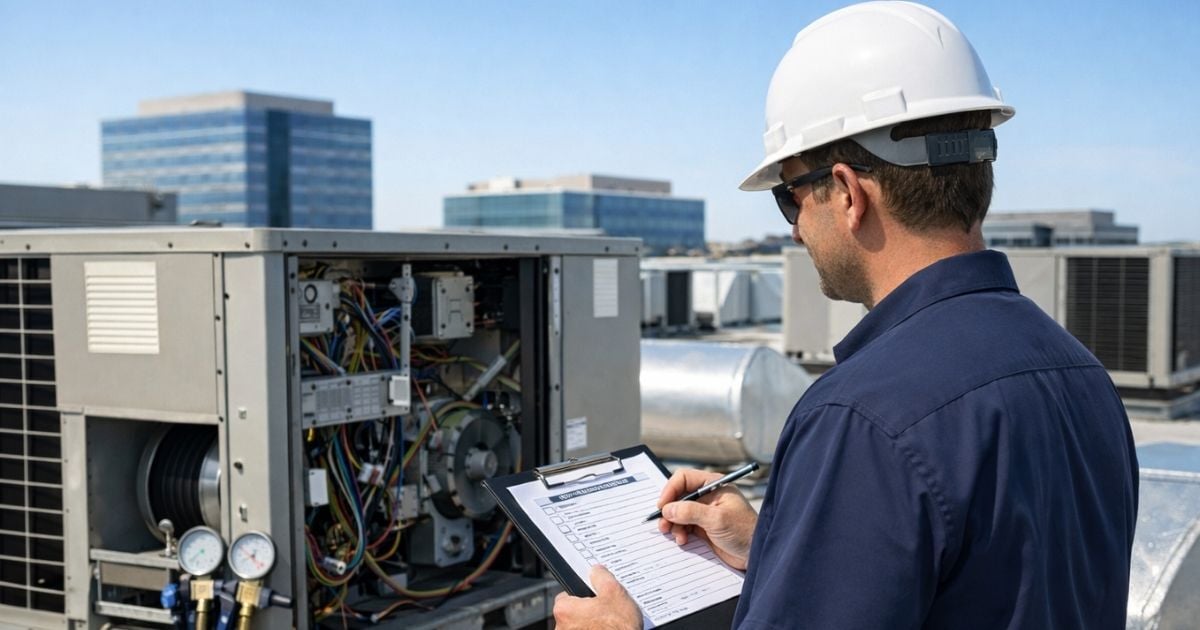
When our technician inspected the system, we found that a zoning damper was stuck partially closed.
The HVAC unit was producing the correct air temperature, but airflow was not reaching part of the building.
Once the damper actuator was repaired and airflow was balanced, both spaces returned to normal temperatures, and the complaints stopped.
Situations like this are common in multi-tenant buildings. A single airflow restriction can affect several areas at once, even when the main HVAC equipment appears to be working normally.
Why Do HVAC Comfort Complaints Increase Over Time?
Many property managers notice that HVAC complaints increase slowly over time.
A building may run smoothly for months or even years. Then an occasional complaint appears. Over time, the complaints become more frequent.
This often means the system is still running but slowly losing efficiency.
Airflow may be decreasing. Components may be wearing out. Controls may be drifting away from proper calibration.
The HVAC system continues operating, but it can no longer maintain the same comfort level it once did.
Without routine inspections, these changes may go unnoticed until tenants begin reporting problems.
Why Do HVAC Repairs Sometimes Only Fix the Problem Temporarily?
When tenants complain, the normal response is to send a technician to fix the immediate problem.
The technician may adjust a thermostat, replace a part, or restore airflow to a certain area.
This can solve the issue temporarily. But, if the overall system performance is declining, the same types of complaints may return later.
Over time, property managers may feel like they are fixing the same HVAC problems again and again. The building becomes reactive instead of stable.
Can Preventative HVAC Maintenance Reduce Tenant Complaints?
One of the best ways to reduce HVAC complaints is to identify problems before tenants notice them.
Commercial HVAC systems usually show early warning signs before comfort issues appear. Components begin wearing down, airflow starts shifting, and sensors move out of calibration.
Routine inspections allow technicians to catch these issues early.hvac
When HVAC systems are regularly cleaned, inspected, and adjusted, temperatures stay more stable across the building.
This helps reduce tenant complaints and prevents emergency service calls.
What Are the Early Signs of HVAC Problems in Commercial Buildings?
Tenant HVAC complaints rarely happen overnight.
Most of the time, they develop slowly as airflow changes, equipment wears down, or system controls drift away from proper calibration.
Many buildings keep operating even while performance slowly declines. By the time tenants notice temperature swings or weak airflow, the system may already be struggling.
If you manage a commercial property, recognizing these early warning signs can help you fix HVAC problems before they turn into ongoing tenant complaints.
At Harold Brothers Mechanical, we help property managers identify HVAC issues early through routine inspections and preventative maintenance. This helps keep building systems stable and tenants comfortable.
If you want to learn more, read our article on how commercial HVAC preventative maintenance helps reduce tenant HVAC complaints.

Topics: