
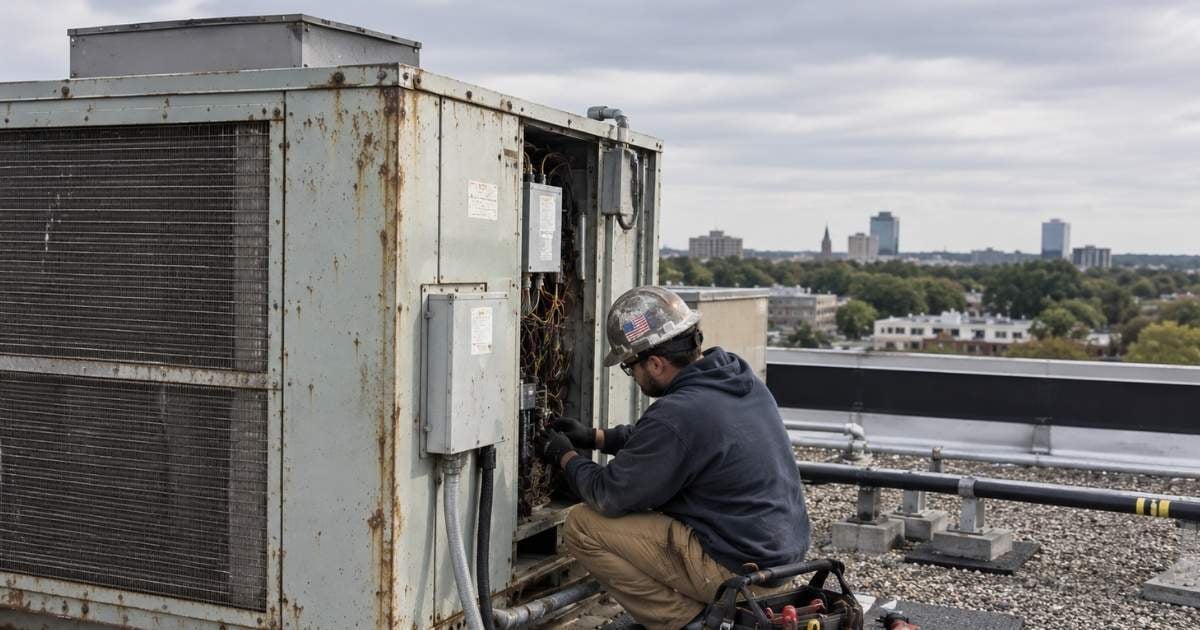
An older commercial HVAC system may still heat and cool your building. That does not mean it is doing the job at a reasonable cost.
As equipment ages, energy use can rise, repairs may become more common, and comfortable temperatures can become harder to maintain. These costs slowly work their way into utility bills, service expenses, and operating budgets.
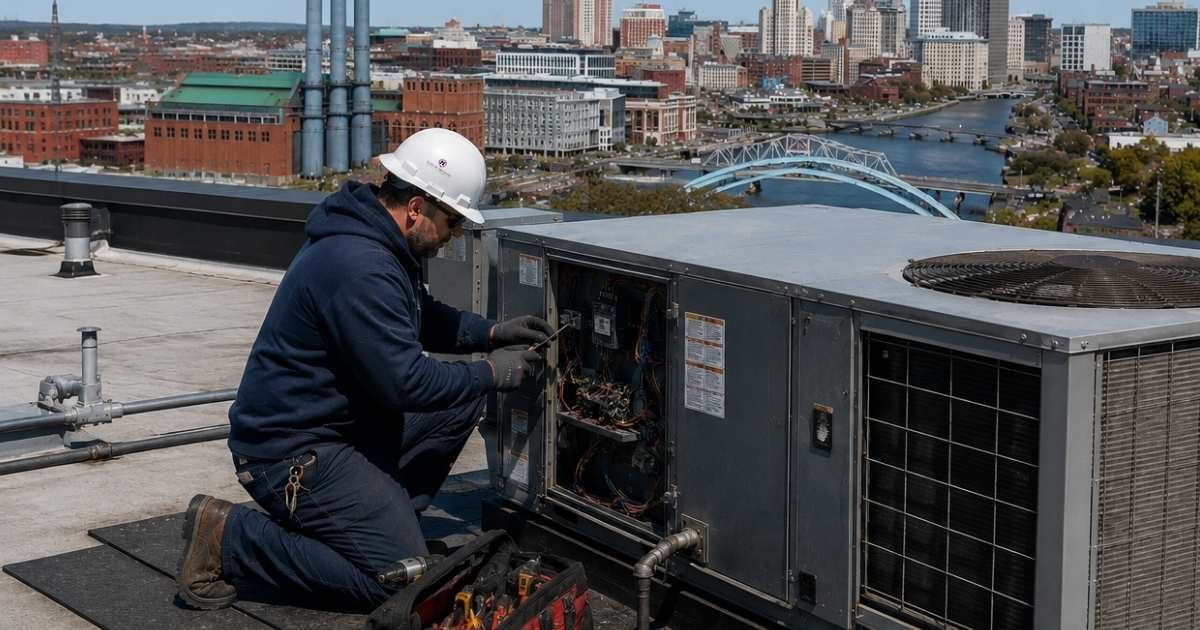
At Harold Brothers Mechanical Contractors, we help commercial building owners and facility teams evaluate aging HVAC equipment. Sometimes a repair is the right choice. Other times, continuing to repair an old system costs more than planning an upgrade.
How Does Old HVAC Equipment Increase Operating Costs?
The cost of aging equipment goes beyond the last service invoice.
Worn motors, compressors, fans, valves, and other components may not operate as well as they once did. The system can take longer to reach the temperature set on the thermostat or run for most of the day.
Aging HVAC equipment may be only one reason why older commercial buildings waste energy. Outdated controls, leaking ductwork, poor insulation, and changes in building use can also increase consumption.
These costs often appear in different places. The utility company sends the energy bill. The service contractor sends repair invoices. Employees report comfort problems. When each issue is handled separately, it is easy to miss the larger pattern.

Are Rising Energy Bills Caused by Your HVAC System?
A higher utility bill does not automatically mean your HVAC equipment is failing. Energy rates, outdoor temperatures, building hours, and occupancy can all affect what you pay.
Compare bills from the same months in previous years. Look at actual energy use when possible, not just the total cost. This can show whether the building is consuming more energy or simply paying a higher rate for it.
Also consider how the equipment operates. Does it start earlier than it used to? Does it keep running after employees leave? Does it rarely shut off during normal weather?
There are several reasons a commercial HVAC system may run constantly. Dirty coils, restricted airflow, failing sensors, control problems, and worn equipment can all contribute.
Some issues can be corrected through maintenance. If an older unit has lost capacity or several major parts are wearing out, another repair may provide only a short-term improvement.
When Do HVAC Repairs Stop Making Financial Sense?
One repair does not mean your HVAC system needs to be replaced. Even older equipment can have a failed part and operate reliably after it is fixed. The decision becomes harder when service calls turn into a routine expense.
We saw this in an office building in Taunton, Massachusetts. The equipment was still running, but employees regularly complained about hot and cold offices. The units operated for long periods, and repairs had become a normal part of the budget. No single repair forced a replacement. It was the combination of service calls, energy use, and continued comfort problems that made it necessary to look at the whole system.
Review what you have spent on each major unit during the past two or three years. Include parts, labor, emergency calls, and temporary heating or cooling. Did those repairs restore dependable operation, or did another problem appear soon afterward?
Understanding common commercial HVAC repairs can help you tell the difference between a normal problem and equipment nearing the end of its useful life.
Parts availability matters too. Components for older units may be difficult to locate or no longer manufactured. The Harold Brothers Service Department can inspect the equipment and explain whether another repair remains practical.
Comfort Problems Can Affect More Than the Thermostat
Hot and cold areas may appear to be a comfort issue rather than a budget problem. In practice, they are often both.
Employees may bring in space heaters or fans. Facility staff may repeatedly adjust thermostats. One area may call for heat while another needs cooling. The system works harder, but people remain uncomfortable.
The main HVAC unit is not always responsible. Uneven temperatures may come from damaged ductwork, poor airflow, incorrect balancing, controls, or changes to the building. However, ongoing office building temperature problems should not be ignored, especially when they continue after repairs.
What Could an Unexpected HVAC Failure Cost?
A planned HVAC project gives you time to compare options, develop a budget, and schedule work around your business. An emergency replacement gives you fewer choices.
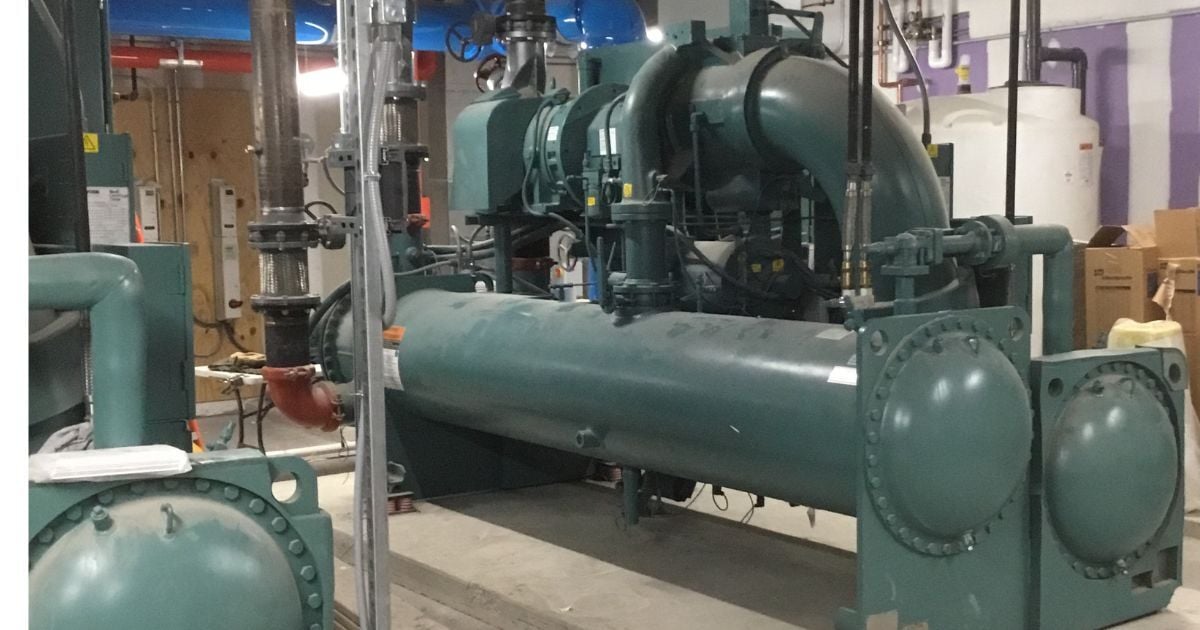
If a rooftop unit, boiler, or chiller fails during extreme weather, part of the building may become unusable. Temporary equipment may be needed, and a replacement may have to be selected based on what is available quickly.
The costs and risks of a commercial HVAC shutdown depend on the property. An office may be able to relocate employees. A healthcare building, laboratory, school, or production facility may have far less flexibility.
Planning early does not mean replacing every old unit immediately. It allows you to identify the equipment most likely to fail and address the highest-risk units first.
A commercial preventative maintenance plan can help find developing problems and give your team better information for future budgeting.
Should You Repair, Retrofit, or Replace the Equipment?
The right choice depends on the equipment’s age, condition, repair history, energy use, and parts availability. Upcoming renovations or roof work may also affect the timing.
|
Option |
When It May Make Sense |
What to Consider |
|
Repair |
The problem is limited, parts are available, and the unit has otherwise been reliable. |
A repair may cost less now, but repeated repairs can quickly add up. |
|
Retrofit |
The main equipment is usable, but controls, motors, fans, or other components are inefficient. |
Targeted improvements may reduce energy use without replacing everything. Read our commercial HVAC retrofit-versus-replacement comparison. |
|
Replace |
The equipment is unreliable, inefficient, expensive to repair, or difficult to find parts for. |
Replacement costs more upfront but may reduce repair risk. Review the cost of commercial HVAC replacement in Massachusetts before a failure forces the decision. |
A contractor can help compare the cost of each option with what you are likely to spend operating and repairing the current equipment.
Look at the Whole Cost Before Deciding
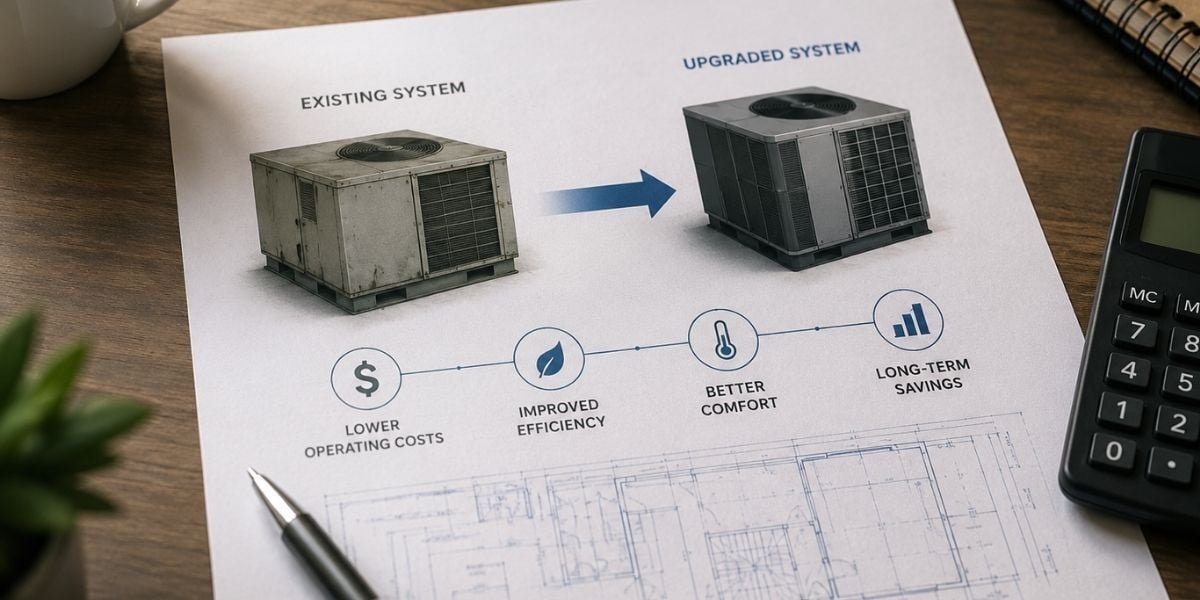
Old HVAC equipment does not always need to be replaced. If it remains reliable, receives regular maintenance, and keeps the building comfortable, continued operation may be the best use of your budget.
The concern is equipment that keeps using more energy, requiring repairs, and creating the same comfort problems. At that point, you may be spending more each year without getting dependable performance in return.
Read our 2026 Guide to Commercial HVAC Energy Efficiency Upgrades. It explains which improvements may lower energy use, improve comfort, and provide more reliable HVAC performance.
Harold Brothers can evaluate your existing equipment, explain whether repairing, retrofitting, or replacing it makes the most sense, and help you plan an upgrade around your budget and building operations.
Topics: