
If you manage a commercial hydronic system, you may notice that your supply and return temperatures never seem to line up. When that happens, you may also see higher energy bills, longer equipment runtime, and more comfort complaints. Delta-T problems rarely stay on a screen. They show up in real operating costs and uneven heating or cooling.
Delta-T is meant to confirm that your system is transferring heat efficiently. When it’s off, something deeper is happening, whether it’s excessive flow, malfunctioning valves, poor heat transfer, or control logic that no longer matches the building’s needs.
At Harold Brothers, we work with commercial facilities to diagnose and correct hydronic performance issues in real operating environments. Too often, delta-T problems are treated as equipment failures when the root cause is actually flow imbalance or programming strategy.
In this article, you’ll learn how to diagnose hydronic delta-T problems systematically by evaluating flow rates, valve operation, coil condition, control sequences, and seasonal load response. By the end, you’ll know how to pinpoint the real cause and address it with confidence instead of guesswork.
Why Is My Hydronic Delta-T Too Low Even When the System Is Running?
Symptoms
- Supply and return temperatures are very close together
- Boilers or chillers run longer than expected
- Pumps seem to be moving large volumes of water
- Some areas feel uneven despite high equipment runtime
When delta-T is too low, water is usually moving too fast through the system. It does not stay in the coil long enough to give up or absorb enough heat. That is why the temperature difference between supply and return stays small.
This often happens because the system is pushing more water than it needs to. Over time, settings get changed, valves get opened, and pumps run harder than they should. The system may look like it is working, but it is not transferring heat efficiently.
Slowing the water down often fixes the problem. When water moves at the right speed, it can transfer more heat before returning to the boiler or chiller. Adjusting pump speeds and rebalancing the system can quickly improve delta-T without replacing equipment.
Could Control Valves Be Causing My Delta-T Problems?
Symptoms
- Delta-T fluctuates throughout the day
- Zones fail to respond to temperature changes
- Pressure readings seem inconsistent
- Valves appear open even when load is low
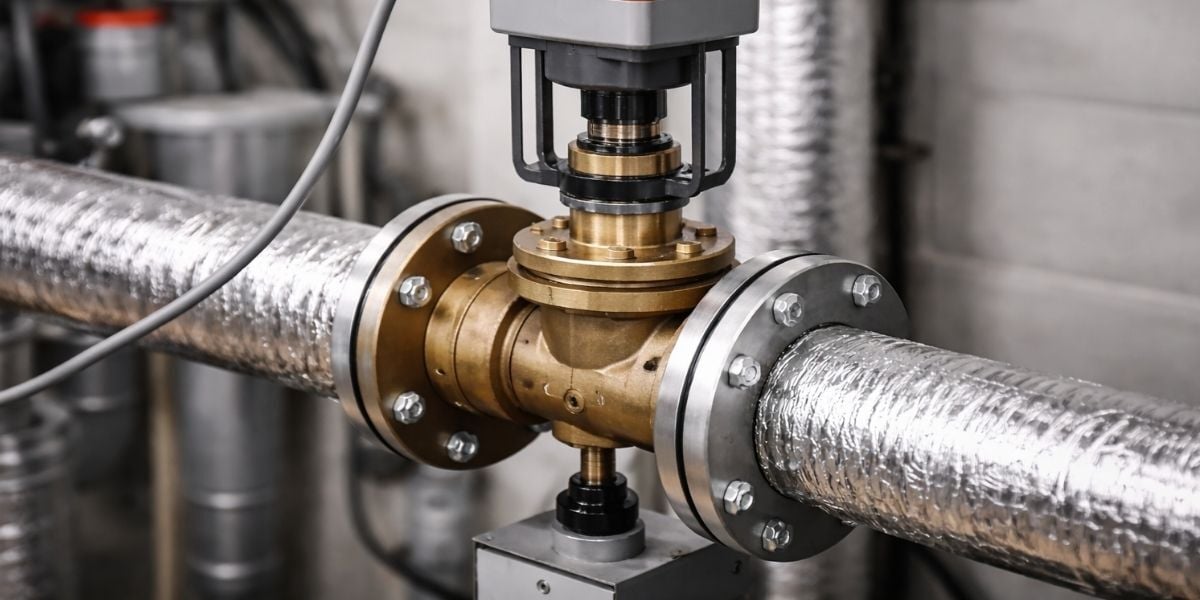
Control valves manage how much water moves through the coils. When they are stuck, the wrong size, or not controlled properly, delta-T can become unstable.
If a valve stays partially open, too much water flows through the coil, and delta-T drops. If a valve cannot open all the way, the coil may not get enough water, which can create unusual temperature differences.
Valve issues often come down to poor setup or wear over time. The valve type must match the system design, and the actuator must respond correctly to the control signal. For example, pressure-independent valves behave differently from standard two-way valves.
When valves are sized correctly and respond properly to load changes, delta-T becomes much more stable and predictable.
Can Dirty Coils or Air in the System Cause Delta-T Issues?
Symptoms
- Delta-T is unusually high
- Certain spaces never reach setpoint
- Equipment runs at full output without results
- Return water temperature drops excessively
High delta-T often means heat is not moving evenly through the system. If air gets trapped inside a coil, water cannot fully touch the heat transfer surface. Less contact means less heat moves where it should. Dirt and scale create a similar problem. Even a thin layer of buildup acts like a winter jacket on your coil. And coils are not supposed to wear winter jackets.
Air in the system also creates uneven flow. Some parts of the coil may stay hot while others do very little work. That leads to strange temperature readings and spaces that never quite reach setpoint.
The fix is usually straightforward. Remove trapped air and make sure separators are working properly. Keep coils clean so water can fully contact the metal surfaces. When coils are clean and air-free, heat moves the way it was designed to, delta-T becomes more stable, and the system runs more efficiently.
Is My BMS Programming Affecting Hydronic Delta-T?
Symptoms
- Delta-T swings without clear load changes
- Pumps run continuously regardless of demand
- Valves move erratically
- Temperature resets do not align with outdoor conditions
Even when the equipment is working properly, poor BMS programming can cause delta-T problems.
Some systems run on fixed settings instead of adjusting to real building demand. Others use outdated control logic that no longer matches occupancy or seasonal changes. In some cases, different parts of the system are not coordinated, which causes them to work against each other.
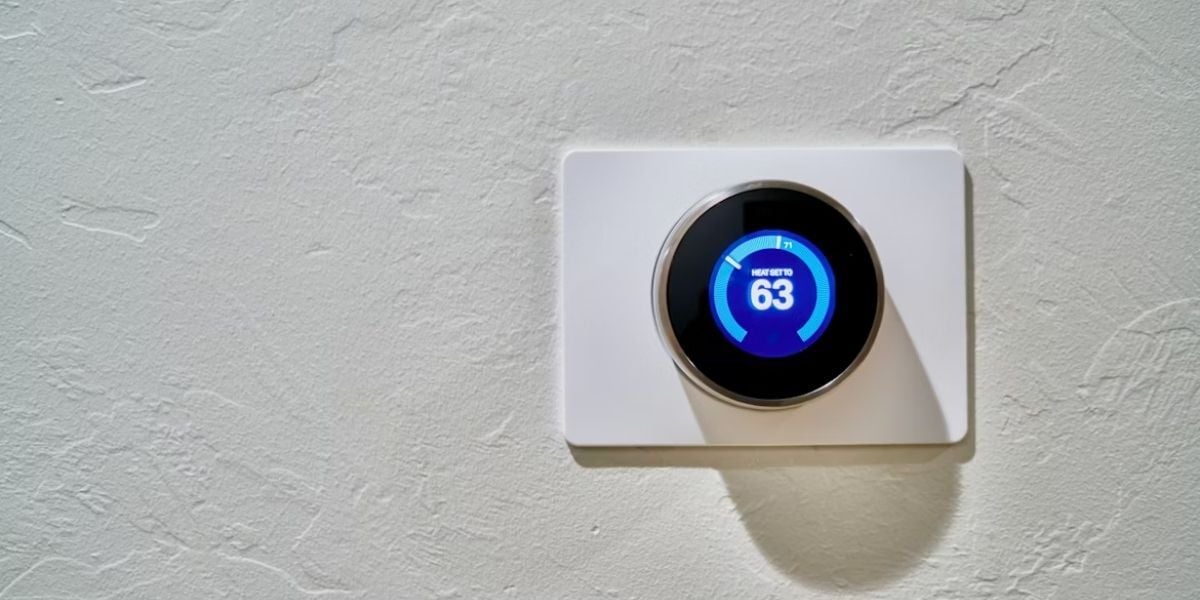
To see if controls are the issue, review system trends. Compare valve commands to actual movement. Look at pump speeds alongside temperature changes. Make sure outdoor temperature resets are actually affecting the system.
Often, the problem is not mechanical. It is programming. When control logic is set up correctly, flow matches demand, temperature differences stabilize, and overall performance improves.
Should Hydronic Delta-T Change With Seasonal Load?
Symptoms
- Delta-T remains the same in winter and summer
- Outdoor temperature changes have no impact on system behavior
- Energy usage increases despite similar comfort levels
Delta-T should respond to load changes. In colder weather, heating demand increases, and water temperature differences often shift accordingly. In the cooling season, different load patterns change how coils perform.
If delta-T remains fixed regardless of load, the system may be operating on rigid setpoints instead of dynamic control strategies.
Diagnose seasonal issues by reviewing historical trends across different months. Compare outdoor air temperature, occupancy levels, and delta-T patterns. A system that adapts to load will show natural variation.
Implementing reset strategies and demand-based control improves responsiveness and efficiency throughout the year.
What Should You Do About Your Hydronic Delta-T Problems?
Hydronic delta-T problems may seem complicated, but they are usually caused by a few common issues. In most commercial systems, the root problem is excessive or insufficient flow, valves not operating correctly, poor heat transfer, control programming mistakes, or seasonal settings that were never adjusted.
If you are seeing unstable temperature differences, long equipment run times, or rising energy costs, your system is likely working harder than it should. Delta-T issues can quietly reduce efficiency and comfort over time.
Your next step is to review how your building automation system is managing pump speeds, valve positioning, and reset strategies. Our guide on Commercial BMS Controls Optimization explains how programming decisions directly impact hydronic performance and long-term operating costs.
At Harold Brothers, we focus on optimizing commercial control strategies to improve efficiency, stability, and reliability. If the mechanical components check out but delta-T problems continue, the solution may not be new equipment. It may be smarter control logic.
Topics: