
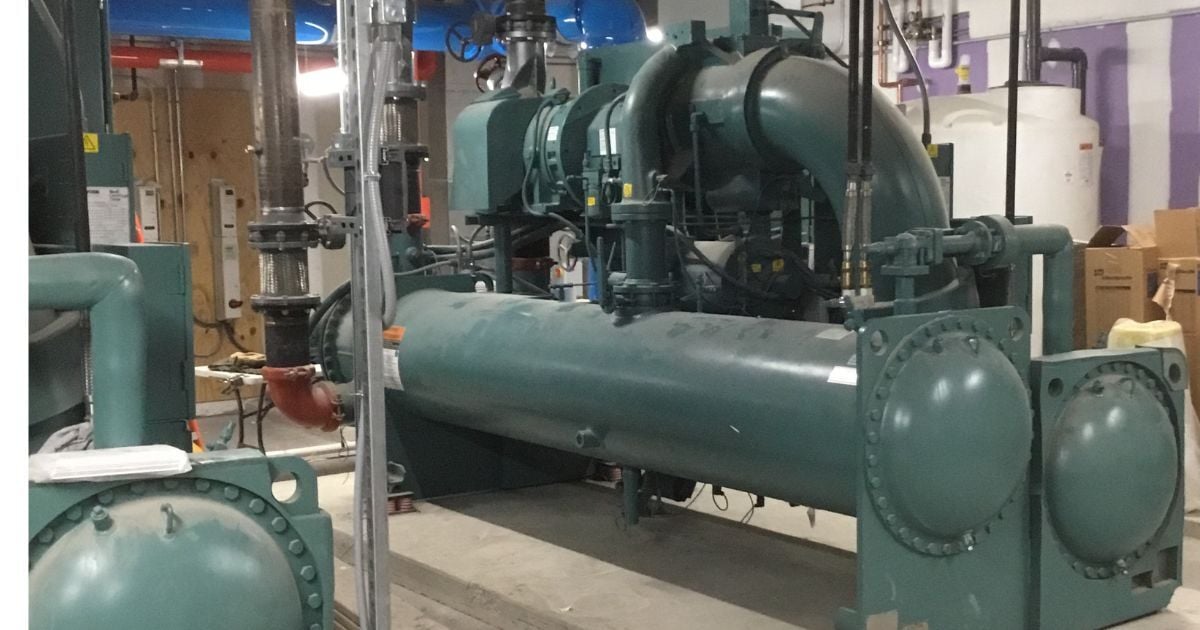
If you manage a commercial building, conversations about hydronic systems can spiral into a blur of loops, pumps, and flow rates fast. The jargon makes it feel like you need an engineering degree just to follow along.
At Harold Brothers, we have spent decades designing, installing, and supporting hydronic systems as part of our full commercial HVAC system maintenance programs. As experienced mechanical contractors, we see firsthand how system design impacts long-term reliability and operating costs.
In this article, you’ll learn the key differences between Primary-Secondary and Variable-Primary-Flow (VPF) hydronic systems, what each one does best, where they fall short, and how to choose the right fit for your building.
Understanding Hydronic System Design in Commercial HVAC Systems
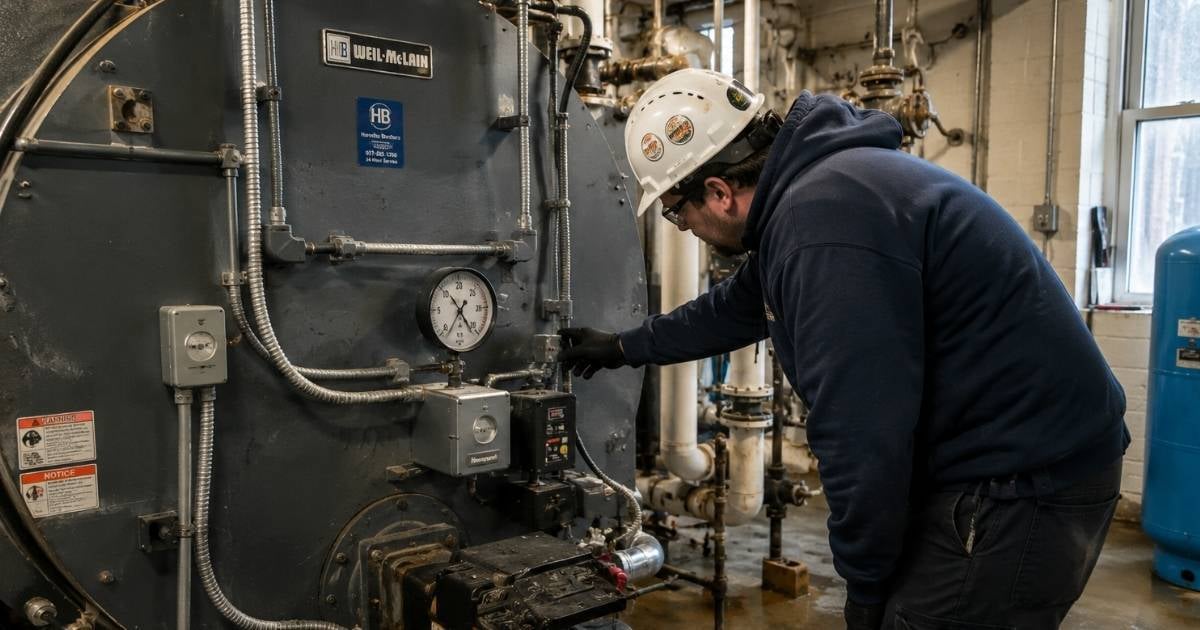
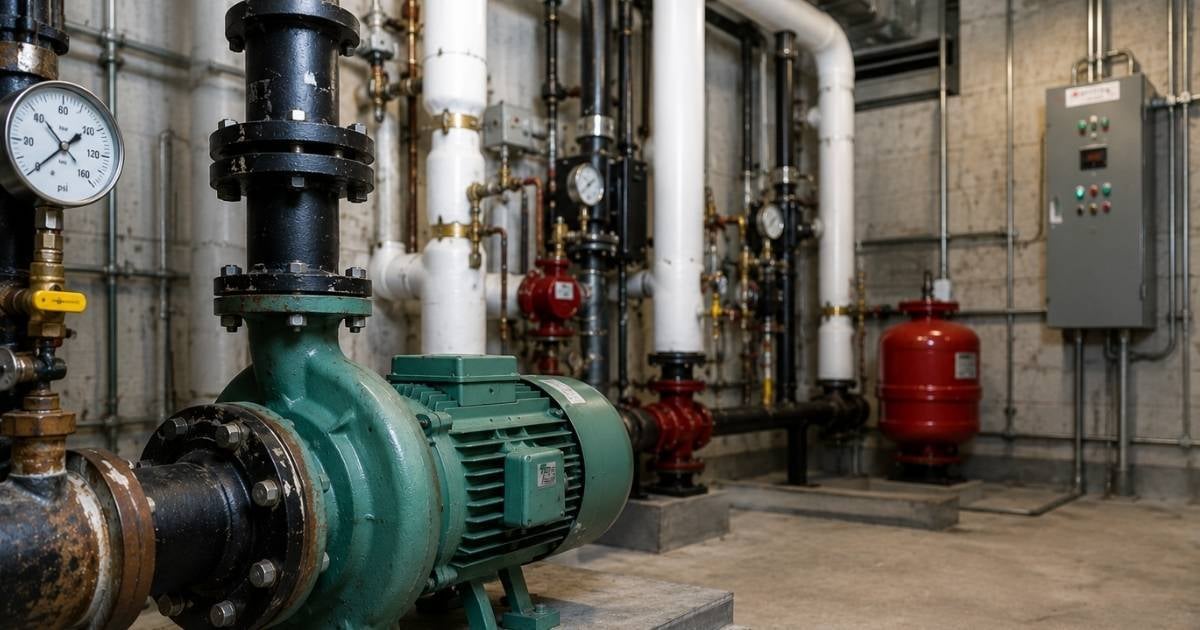
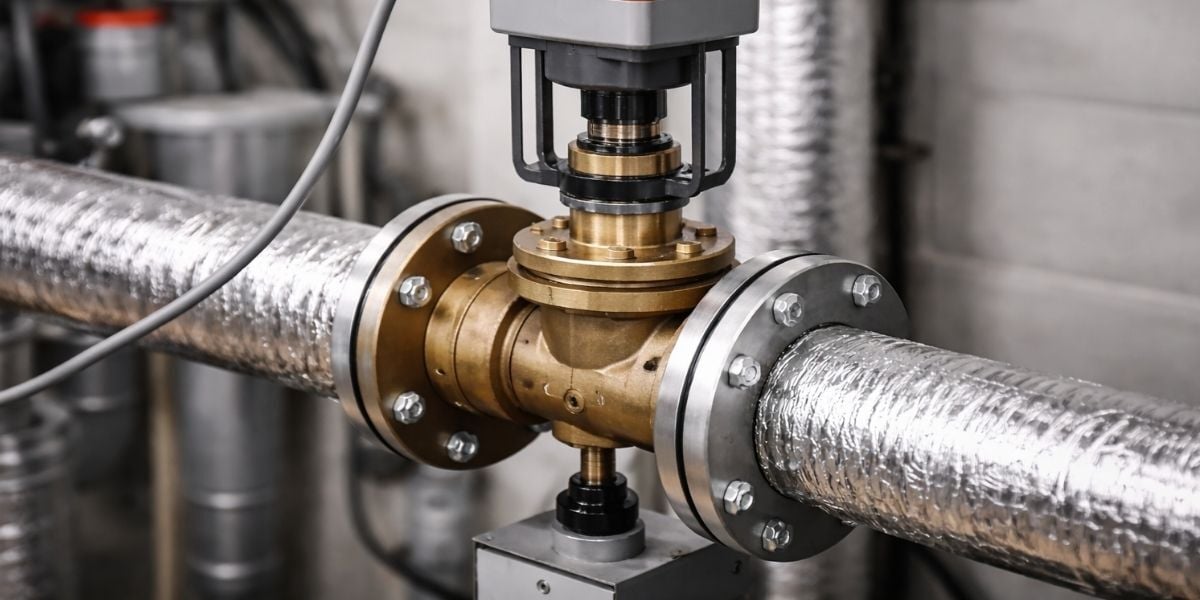
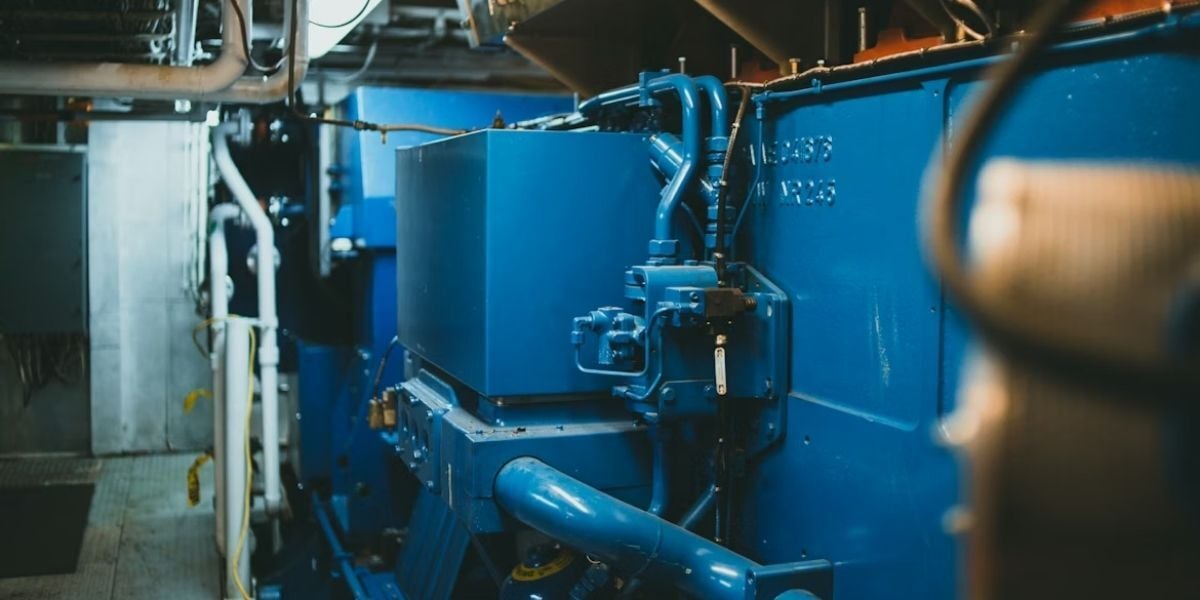
A hydronic system heats or cools a building by moving water through pipes instead of air through ducts. A boiler or chiller conditions the water, pumps move it through the building, and coils or terminals use that water to heat or cool the space.
That sounds simple enough, but how the pumps are arranged makes a big difference in performance, efficiency, and reliability. Pumps are the muscle of the system, and like any muscle, they fail when they are pushed too hard for too long. Pumps do not fail because they hate you. They fail because someone made them work harder than they should.
That idea shows up clearly when comparing Primary-Secondary and Variable Primary Flow systems. How these pumps and loops are arranged directly effects HVAC preventive maintenance, energy use, and how often service issues show up over time.
Primary-Secondary Hydronic Systems: Stable, Reliable, and Easy to Maintain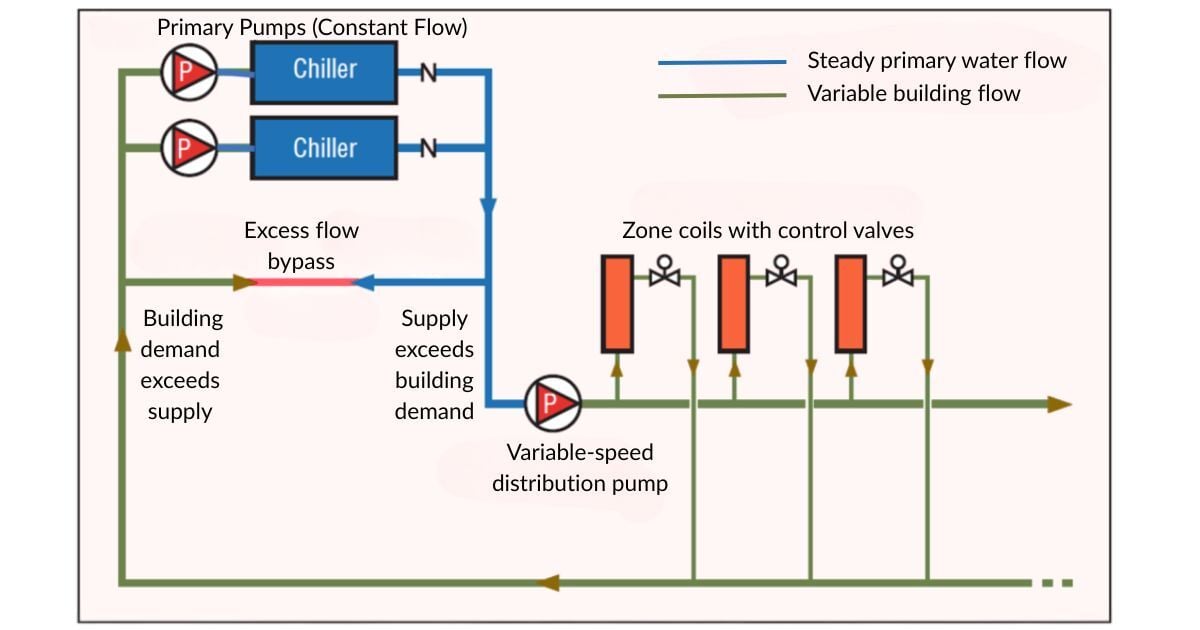
A Primary-Secondary system separates the job into two parts, one pump loop serves the boiler or chiller, while another set of pumps serves the building. The two loops are connected in a way that lets water move between them without interfering with each other.
This setup keeps equipment happy. Boilers and chillers maintain constant-primary-flow regardless of secondary load fluctuations with in the building . Zones can turn on and off without upsetting the plant.
Primary-Secondary systems are popular because they are forgiving. If something changes in the building, the system typically keeps working. If an explanation of this system feels complicated, that is often because it is being overexplained. At its core, Primary-Secondary is about control and protection.
The tradeoff is efficiency. More pumps and piping means more energy use and parts to maintain. Pumps often run even when demand is low, which will add wear over time. From a preventive maintenance standpoint, Primary-Secondary systems are often easier for HVAC contractors to diagnose and service because flow remains predictable.

Variable Primary Flow Hydronic Systems: Energy-Efficient but Design-Sensitive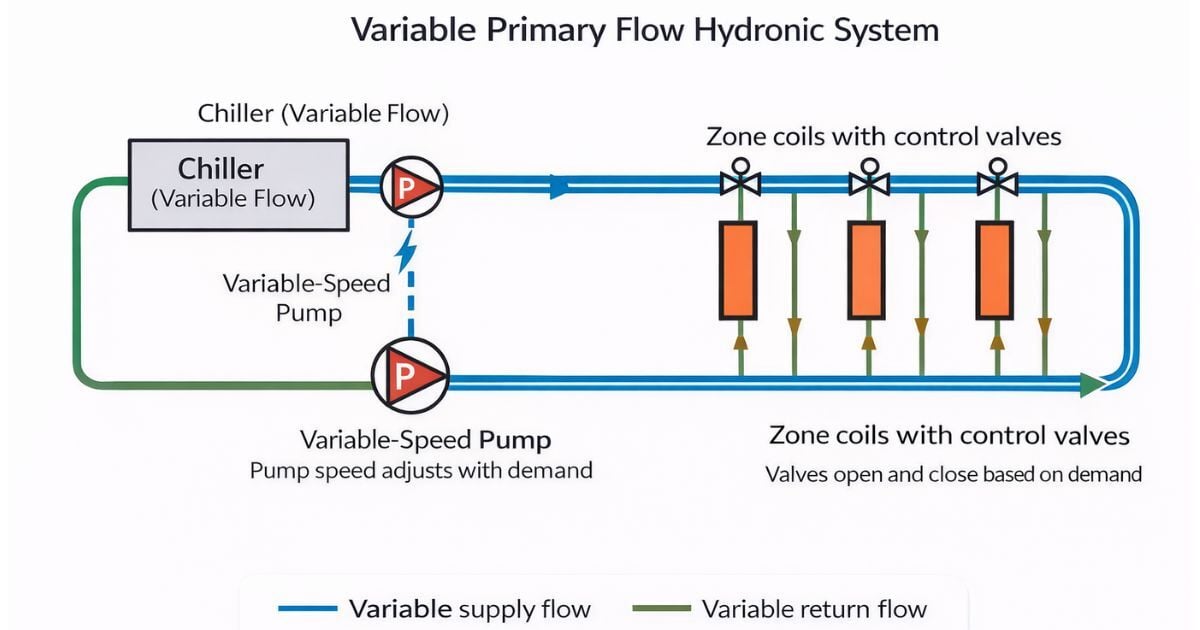
Variable Primary Flow (VPF) systems simplify the piping but rely more heavily on controls. Instead of separate loops, the boilers or chillers are connected directly to the building distribution loop. Variable-speed pumps adjust flow based on demand.
When the building needs less heating or cooling, the pump speed slows down. When demand rises, pump speed increases. This reduces energy use and can significantly lower operating costs.
However, Variable-Primary-Flow systems require careful design. System flow must be maintained within the equipment's specified operating envelope. Controls must be properly tuned. If shortcuts are taken, pumps may work too hard or boilers may cycle incorrectly.
Because Variable Primary Flow systems depend heavily on controls, they require consistent commercial HVAC system maintenance to stay efficient. When maintenance is skipped or controls are misunderstood, small problems can turn into larger operational issues.
This is where clear communication matters most. When Variable Primary Flow systems run into trouble, the issue is often not the concept itself, but how it was designed, explained, or operated.
Primary-Secondary vs Variable Primary Flow: Side-by-Side Comparison
|
Category |
Primary-Secondary |
Variable Primary Flow |
|
Pump arrangement |
Separate boiler and building loops |
Single shared loop |
|
Pump quantity |
More pumps |
Fewer pumps |
|
Flow stability |
Very high |
High (with good design) |
|
Moderate |
High |
|
|
Controls complexity |
Moderate |
Higher |
|
Forgiveness to design errors |
High |
Lower |
|
Long-term pump wear |
Moderate |
Lower when designed correctly |
Which Hydronic System Is Right for Your Commercial HVAC Operation?
What matters most is not the system type, but whether it aligns with how your building operates and how your HVAC preventive maintenance program is structured.
Primary-Secondary systems are often a better fit for buildings where reliability comes first. Older equipment, complex zoning, and facilities that cannot afford surprises often benefit from this approach.
Variable Primary Flow systems are often a better fit for newer buildings or renovations where energy efficiency is a top priority and controls are properly supported.
Practical performance depends on operational fidelity, not just system structure. A well-executed primary-secondary design will provide better operational stability, than a poorly commissioned variable-primary system every time.
Why Hydronic Systems Feel Confusing (and How Mechanical Contractors Simplify Them)
Hydronic systems gain a reputation for being complicated because they are often explained poorly. When someone jumps straight into technical terms without explaining the “why,” it creates confusion.
In reality, both system types are about managing flow so pumps don't work harder than necessary. When pumps are oversized, miscontrolled, or forced to run against closed valves, failures will happen. Not because the equipment is bad, but because the system was not aligned with real-world operation.
Understanding this helps building owners ask better questions and make better decisions. Experienced mechanical contractors focus on explaining how flow, controls, and maintenance all work together, not just how the system looks on paper.
Hydronic Design, Preventive Maintenance, and Long-Term Reliability
Primary-Secondary and Variable Primary Flow systems are both proven approaches in commercial HVAC, but their success depends on design, operation, and ongoing preventive maintenance. Selecting the option that aligns with how your system actually operates, is the most critical factor.
If you started this article feeling unclear about the difference, you’re not alone. Many building owners feel overwhelmed until they see the logic spelled out in plain language.
If you're interested in going deeper into how hydronic design impacts energy use, your next step is to read our article on commercial HVAC energy reduction strategies. It breaks down actionable ways to lower operating costs through smarter system design. The right system paired with the right HVAC contractors and maintenance strategy will always provide better energy performance than a system chosen on efficiency claims alone.
At Harold Brothers, we help commercial facilities cut through complexity and make confident, informed decisions about their HVAC systems.

Topics: