
If you’re planning an HVAC controls upgrade, you’re likely asking yourself a big question:
Should you keep things simple with standalone controls, or invest in a more advanced Building Management System (BMS)?
This decision can feel overwhelming. On the one hand, standalone systems are faster and cheaper to install. On the other hand, BAS integration offers smarter control, better energy savings, and long-term value. It’s not always easy to know which one is right for your building or your budget.
At Harold Brothers Mechanical, we’ve helped facility managers and building owners navigate this exact decision for decades. We understand how different each building is, and how important it is to choose a solution that supports your long-term goals, not just today’s fix.
In this article, you’ll get a clear, side-by-side look at both options. We’ll walk you through what each system does, when each one makes sense, and how to choose the right fit based on your goals, building size, and future plans. By the end, you’ll feel confident making a decision that supports both your short-term needs and long-term building performance.
What Are Standalone Controls?
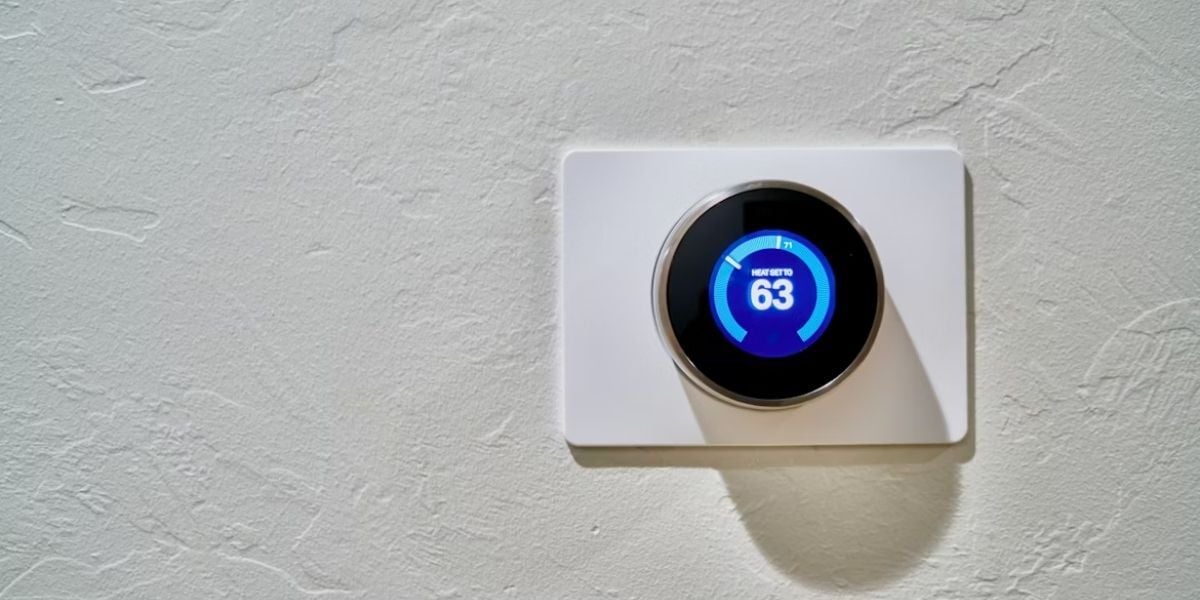
%20-%202026-01-22T110715.598.jpg?width=292&height=389&name=Untitled%20(768%20x%201024%20px)%20-%202026-01-22T110715.598.jpg) Standalone controls are simple systems used to run one piece of equipment at a time. These systems work on their own. They don’t connect with other equipment or with a central computer. Think of them like a basic home thermostat. It turns on your heater or air conditioner, but it doesn't communicate with your lights, security system, or anything else.
Standalone controls are simple systems used to run one piece of equipment at a time. These systems work on their own. They don’t connect with other equipment or with a central computer. Think of them like a basic home thermostat. It turns on your heater or air conditioner, but it doesn't communicate with your lights, security system, or anything else.
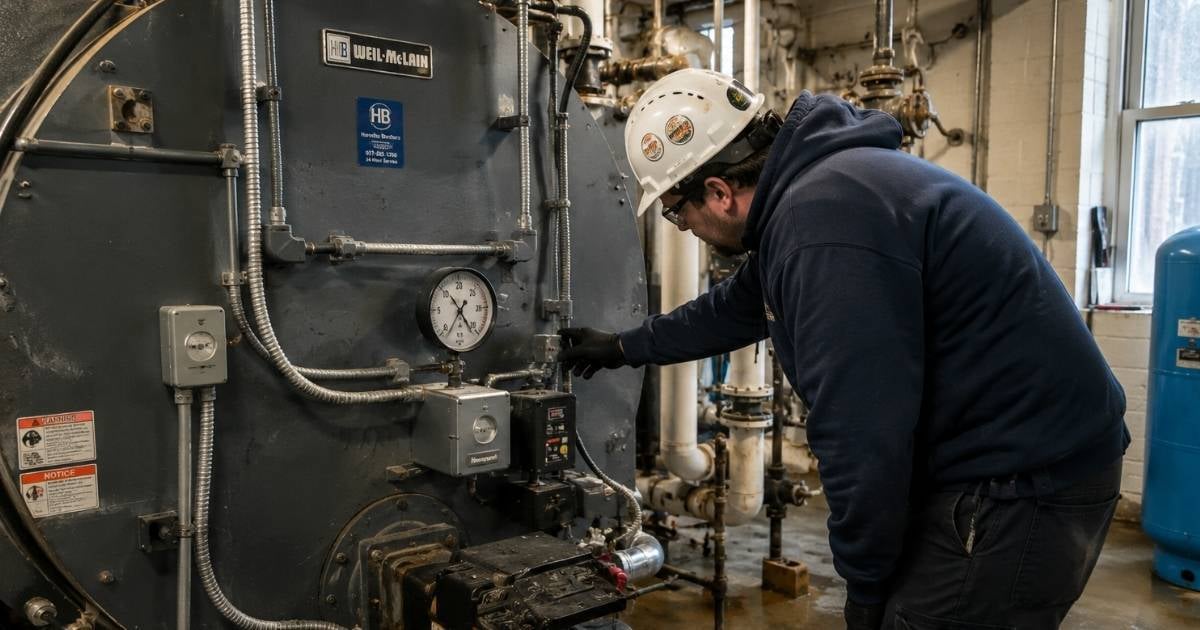
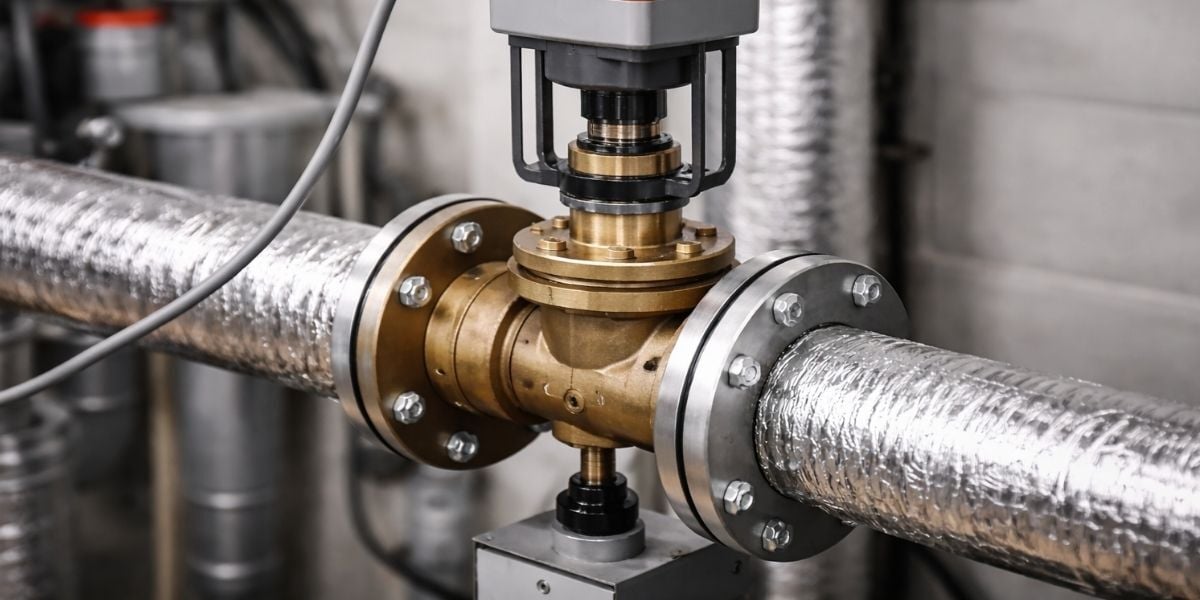
In a commercial setting, standalone controls are often used to operate equipment such as rooftop HVAC units, boilers, or air handlers. Each piece of equipment has its own local controller or thermostat. It does its job independently without any help from other parts of the building.
This setup is usually quick to install and easy to replace. Many building owners choose it when they need a fast, low-cost fix or are only replacing one or two systems.
What Is a Building Management System (BMS)?
A Building Management System, or BMS, is a smart network that connects all the major systems in your building. This can include heating, cooling, lighting, ventilation, and more. Everything works together, and it can all be controlled from a single location, often a computer or even a mobile app.
Unlike standalone controls, a BMS lets you see everything that’s happening in your building in real time. It can adjust settings automatically based on time of day, room temperature, or whether people are in the building. It can even send alerts when something isn’t working right.
Because it helps all systems communicate, a BMS is great for energy savings. Over time, it can lower your utility bills and help your equipment last longer.
Understanding the Key Differences
So what really separates these two options?
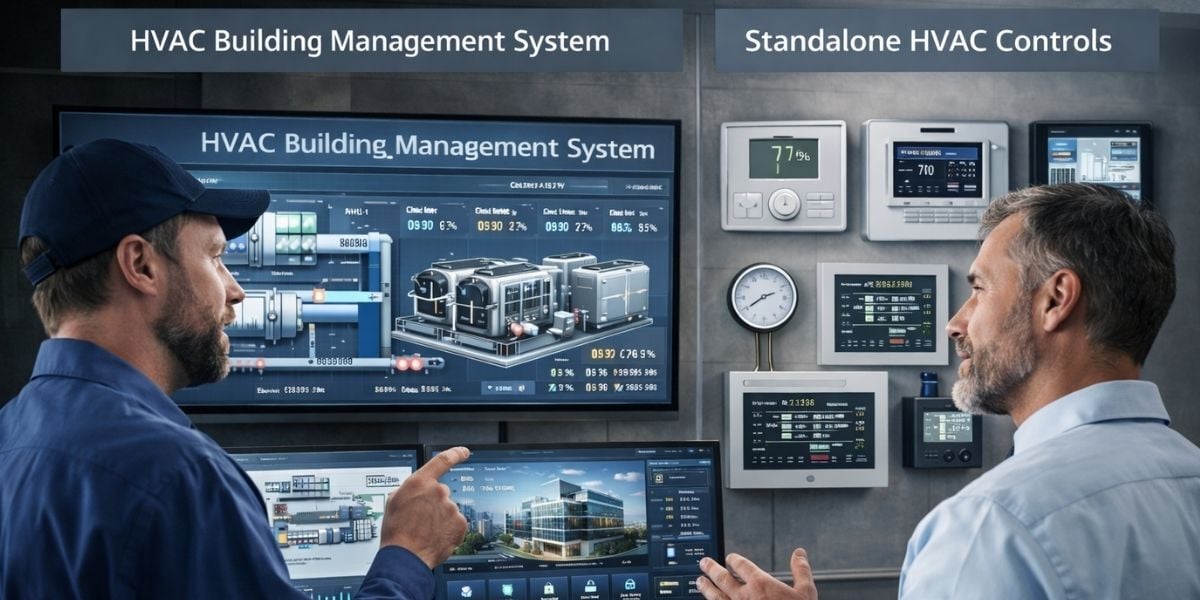
Standalone controls are all about simplicity. Each unit runs by itself. If something goes wrong, you check that one unit. It’s basic, but sometimes that’s all you need.
A BMS, on the other hand, is a full network. All your systems are connected and can work together. It gives you more control, more data, and more tools to save energy and reduce problems before they happen.
In short, a standalone is simple and has a lower cost up front. BMS is smarter, more powerful, and better for long-term building management.
When Standalone Controls Make the Most Sense
If you’re working on a small building or only replacing one or two pieces of HVAC equipment, standalone controls are often the right choice. They’re faster to install, cost less at the beginning, and don’t require much training to use.
Let’s say your rooftop unit breaks down and needs to be replaced. Installing a new one with a standalone controller can be done in a day or two. It gets the job done and keeps the building running.
Standalone controls are also helpful if you’re dealing with a tight budget or a temporary space. They’re simple, direct, and still do their job well, just without the bells and whistles of automation or advanced scheduling.
When BMS Integration Is the Better Fit
%20-%202026-01-22T105451.169.jpg?width=313&height=418&name=Untitled%20(768%20x%201024%20px)%20-%202026-01-22T105451.169.jpg) BMS integration is often the smarter path if you’re managing a large building or planning for the future. It may cost more upfront, but the long-term savings and control are usually worth it.
BMS integration is often the smarter path if you’re managing a large building or planning for the future. It may cost more upfront, but the long-term savings and control are usually worth it.
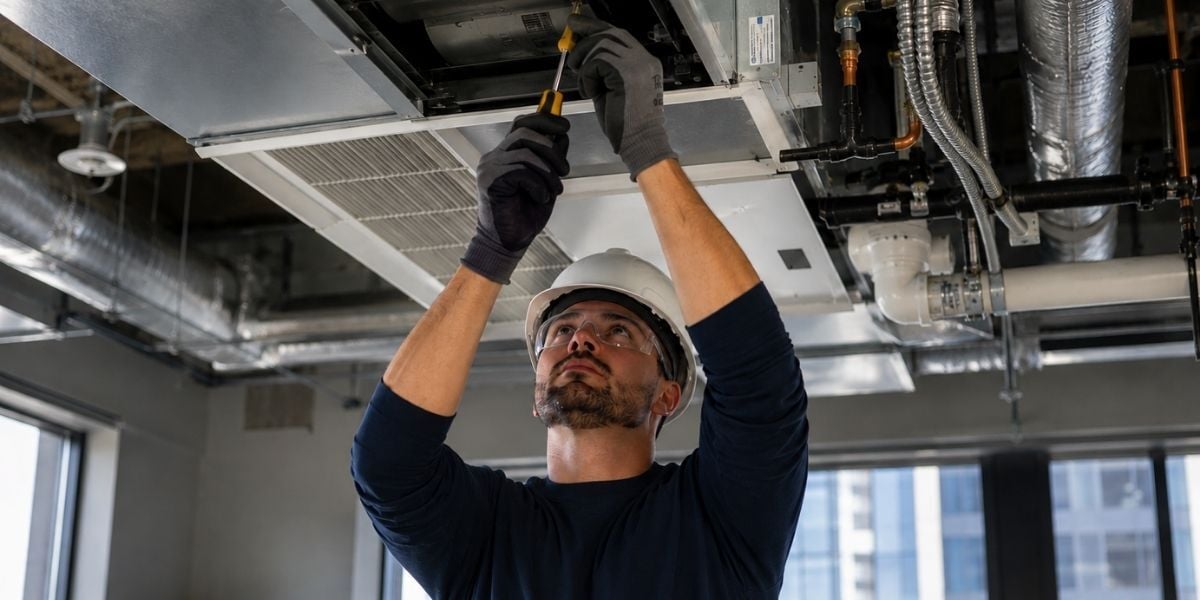
If you have multiple HVAC units, different zones in the building, or energy goals to meet, a BMS gives you tools that standalone controls can’t. You can schedule temperature changes based on work hours. You can monitor performance remotely. You can even get alerts when something starts to go wrong, before it becomes a big problem.
In places like schools, hospitals, large offices, or government buildings, BMS systems are often expected. They help staff manage everything more easily and keep the systems running smoothly over time.

Is It Possible to Combine Both?
Yes, and many people do. Some new standalone controls are what we call “BMS-ready.” That means they work on their own now, but can be connected to a larger automation system later. If you’re not ready to invest in a full BMS yet, this can be a smart middle step.
This option gives you flexibility. You get what you need today without locking yourself out of future upgrades. If your budget grows or your needs change, you can build on what you already have.
What About the Cost?
%20-%202026-01-22T111153.835.jpg?width=337&height=449&name=Untitled%20(768%20x%201024%20px)%20-%202026-01-22T111153.835.jpg) Cost is one of the biggest questions people have when choosing between these two options. Standalone controls usually have a much lower price tag at the beginning. You’re paying for one piece of equipment and one controller, and that’s it.
Cost is one of the biggest questions people have when choosing between these two options. Standalone controls usually have a much lower price tag at the beginning. You’re paying for one piece of equipment and one controller, and that’s it.
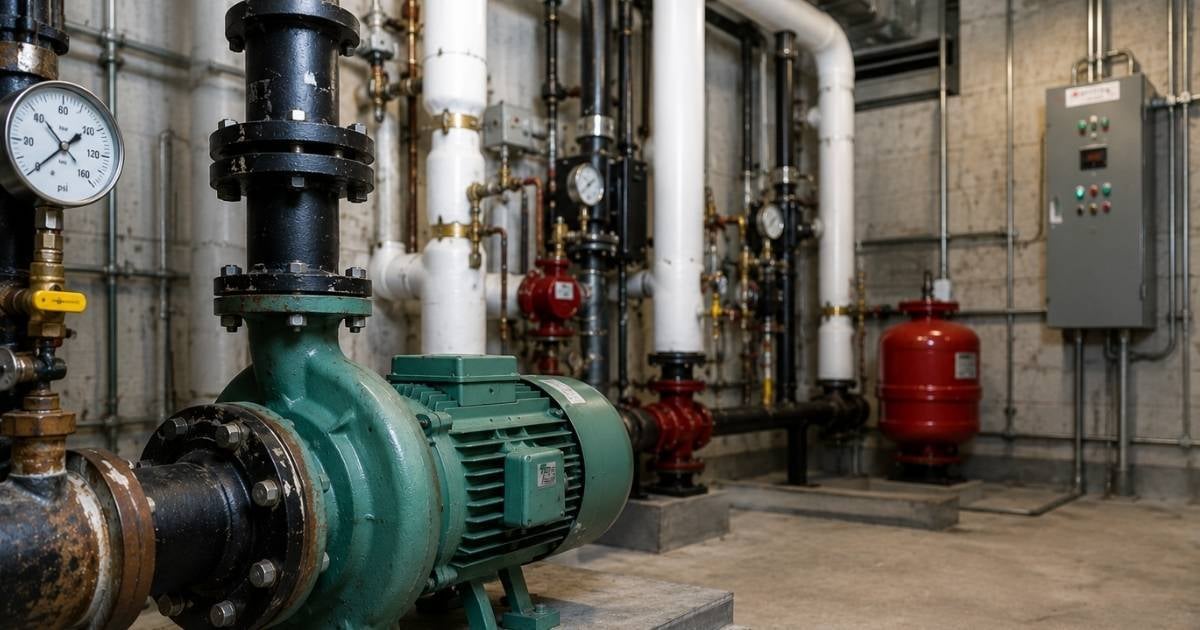
A BMS, however, involves more pieces. There’s software to install, networking equipment to set up, and someone needs to program the system to work properly. That makes it more expensive upfront.
But here’s the key: a BMS can pay for itself over time. It saves energy, cuts down on emergency repairs, and helps equipment last longer. It also reduces the time staff spend checking and adjusting things manually.
So instead of just thinking about cost today, it helps to ask, “What will this save me over the next five or ten years?”
What Do Experts Say?
Experts in HVAC and building management often give the same advice: make your decision based on long-term needs. If you’re only planning to stay in the building for a short time or need a quick fix, standalone controls may be all you need. But if you’re managing the building for the long haul, it makes sense to think bigger.
Although a BMS system may seem more complicated at first, most facilities find it easier to manage once they become accustomed to it. You get access to data, alerts, and tools that make running the building smoother and more efficient.
Many pros also recommend having a site walk-through with a controls expert before making a decision. That way, you can get a clear idea of what’s possible, what it will cost, and what makes the most sense for your goals.
Choosing the Right Controls Solution
There’s no one-size-fits-all answer when it comes to HVAC controls. Standalone systems can be the right fit for small buildings or short-term needs. At the same time, BMS integration is often more suitable for long-term performance, energy savings, and enhanced building management.
Now that you understand the key differences, the next step is to talk with a professional who can evaluate your system and goals.
Harold Brothers Mechanical has helped building owners and facility managers make smart control upgrades for decades. Whether you're planning a quick fix or a full system integration, our team can help you choose the right path forward.
Curious as to why your HVAC system might not be responding the way it should? Learn more in our article, “How to Test and Calibrate HVAC Sensors So Your Controls Give Accurate Readings.” When your sensors are reliable, your entire system performs better, and we’re here to help make that happen.
Topics: