
If your building feels stuffy, smells a little musty, or your team is complaining about headaches or sinus irritation, your first assumption might be that the air outside is to blame, or that you need expensive air purification equipment. But what if the problem is coming from inside your building?
After more than 17 years serving commercial buildings across Massachusetts, Harold Brothers has seen how small maintenance gaps turn into real air quality problems. Because the company operates as an open shop, our team has the flexibility to respond quickly, adjust schedules around your building’s needs, and pair the right technicians with the right systems. Over the years, we’ve seen the same pattern unfold again and again. HVAC systems that are supposed to improve indoor air quality can slowly begin making it worse when filters stay in too long, coils go uncleaned, or airflow never gets properly balanced.
In this article, you’ll learn the hidden ways HVAC systems quietly degrade indoor air quality, why these issues show up long before something breaks, and how a consistent preventative maintenance program keeps your air cleaner, your humidity levels stable, and your building more comfortable year-round.
How HVAC Systems in Commercial Buildings Start Hurting Indoor Air Quality
Indoor air issues usually don’t happen suddenly. They appear slowly as filters clog, coils get dirty, airflow becomes unbalanced, or sensors drift out of calibration.
Dirty Filters: A Common Preventative Maintenance Issue That Impacts Airflow
Filters are designed to trap dust, pollen, and other airborne particles. When they clog, the system has to work harder to pull in air. That strain pushes contaminants around the building and reduces airflow where it’s needed most.
A dependable filter replacement schedule is one of the simplest ways to maintain healthier indoor air.
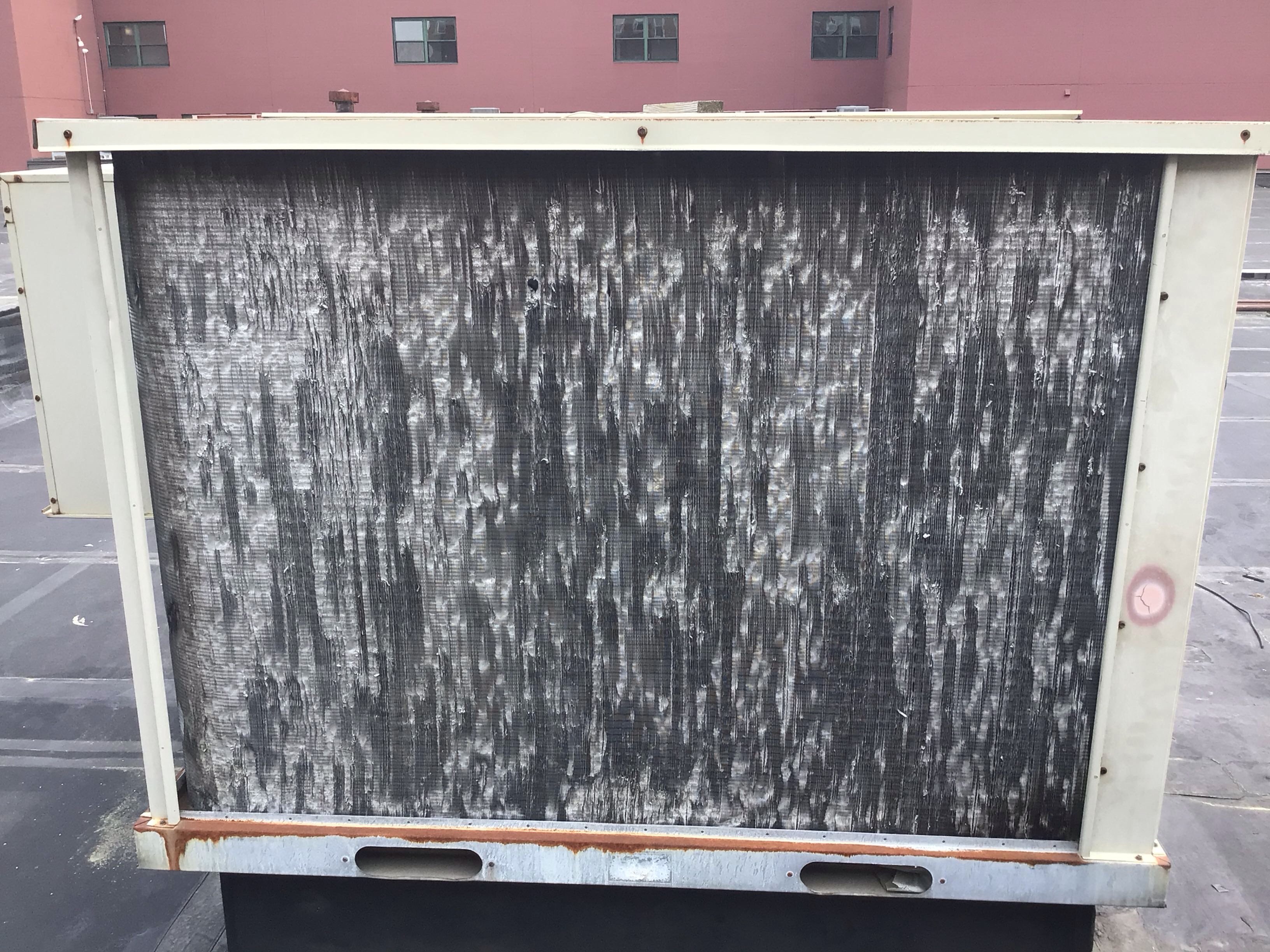
Why Dust-Coated Coils Create Humidity and Air Quality Problems
Your coils control humidity and temperature. When they collect debris, the system struggles to drain moisture, airflow slows, and musty odors begin to appear. Routine coil cleaning is a standard part of commercial maintenance because it directly protects humidity control and IAQ.
ENERGY STAR highlights coil cleaning as a top practice in their Operations & Maintenance Best Practices Guide.
Unbalanced Airflow: The Hidden HVAC Maintenance Problem in Many Office Buildings
If an office or conference room feels stale or humid, airflow is usually the culprit. Blocked ducts, stuck dampers, or weak returns cause air to stagnate and contaminants to linger longer.
Balanced airflow is a major focus during each visit in our PM Walkthrough
How Miscalibrated Sensors Disrupt Comfort and Ventilation in Commercial Spaces
Temperature and humidity sensors drift out of calibration over time. When that happens, the system may bring in too little fresh air or overwork itself chasing incorrect readings. A routine calibration prevents this. Mitsubishi also highlights this in their HVAC Maintenance Tips
How Preventative HVAC Maintenance Protects Indoor Air Quality Year-Round
Your HVAC system touches every bit of air that moves through your building. When it’s maintained consistently, the entire environment becomes healthier, more comfortable, and more predictable.
Preventative maintenance helps indoor air quality by:
- Keeping contaminants from circulating
- Ensuring the building has steady, balanced airflow
- Controlling humidity so mold and bacteria can’t grow
- Preventing hidden wear from turning into major IAQ problems
- Providing clear reporting so you always know what was done and what’s coming next
For more detail on costs and service frequency, see our PM Cost Blog.
The U.S. Department of Energy also emphasizes that preventative maintenance is one of the most effective ways to maintain IAQ and system performance in their Preventative Maintenance Guide for Commercial HVAC Equipment
Signs Your Commercial HVAC System Is Making Indoor Air Quality Worse
If you’ve noticed any of the following, your HVAC system may already be contributing to indoor air issues:
- Musty or stale odors
- Workers reporting headaches or sinus irritation
- Dust collecting around vents
- Hot or cold spots from uneven airflow
- High humidity or condensation
- More frequent allergy symptoms indoors
These are all early clues that the system needs cleaning, calibration, or airflow adjustments.
Why Indoor Air Quality Problems Become Expensive Without Routine HVAC Maintenance
Poor indoor air quality does more than frustrate building occupants. It can increase energy use, strain the equipment, shorten system lifespan, and lead to more frequent service calls.
Constellation Energy notes that deferred maintenance is one of the leading causes of early HVAC failure in their resource on HVAC Lifespan and Efficiency Tips
Preventative maintenance stops these issues before they become expensive and keeps your building in compliance, comfortable, and easier to operate.
Why Preventative HVAC Maintenance Keeps Your Building Healthier and More Efficient
You now know that indoor air quality problems often stem from everyday HVAC issues like clogged filters, dirty coils, unbalanced airflow, or sensors that fall out of calibration. These issues don’t appear all at once. They build slowly over time, affecting comfort, airflow, and humidity control long before anyone realizes what’s happening. The right preventative maintenance plan stops these problems early and keeps your building operating the way it was designed to.
If you’re noticing musty odors, uneven temperatures, rising humidity, or employees mentioning headaches or sinus irritation, those are early signs your HVAC system may already be contributing to indoor air issues. The good news is that these are exactly the kinds of problems routine maintenance is meant to solve. Harold Brothers’ technicians approach every visit with a focus on airflow, cleanliness, and system performance so your building stays ahead of comfort complaints.
Your next step is to explore what a preventative maintenance agreement includes and how it proactively protects air quality, energy use, and long-term system health. Harold Brothers supports this with clear XOI reporting, giving you photos, notes, and recommendations from each visit so you always know what was done and what’s coming next.
Harold Brothers has helped building owners and facility managers stay ahead of HVAC issues through reliable scheduling, open-shop flexibility, and a team that takes pride in

FAQ
1. How can a commercial HVAC system make indoor air quality worse?
A commercial HVAC system can worsen indoor air quality when filters clog, coils stay dirty, airflow becomes unbalanced, or sensors drift out of calibration. These issues allow contaminants to circulate, humidity to rise, and stale air to linger in occupied spaces.
2. What are the most common HVAC issues that affect indoor air quality?
The most common IAQ-related HVAC issues include dirty filters, dust-covered coils, blocked or unbalanced airflow, miscalibrated sensors, and inadequate fresh-air intake. These problems develop slowly and often go unnoticed without routine maintenance.
3. How does preventative HVAC maintenance improve indoor air quality?
Preventative maintenance keeps the system clean, restores proper airflow, ensures correct humidity control, and helps technicians catch early issues before they affect comfort. Regular service prevents contaminants from building up and reduces IAQ complaints in commercial buildings.
4. What signs indicate my building’s HVAC system is hurting air quality?
Warning signs include musty odors, high humidity, dust around vents, uneven temperatures, allergy symptoms, or employees reporting headaches or sinus irritation. These symptoms often point to airflow restrictions or components that need cleaning or recalibration.
5. Can poor indoor air quality increase HVAC costs?
Yes. When IAQ-related problems go unchecked, the HVAC system works harder to compensate. This increases energy use, accelerates equipment wear, and leads to more frequent service calls or premature component failures.
Topics: