
If you manage or maintain a commercial building, you’ve likely seen this problem before. The HVAC unit appears to be working correctly. The supply air temperature looks perfect. In the summer, the air leaving the unit is cold. In the winter, it’s warm, just like it should be.
But the space still won’t reach the thermostat setpoint.
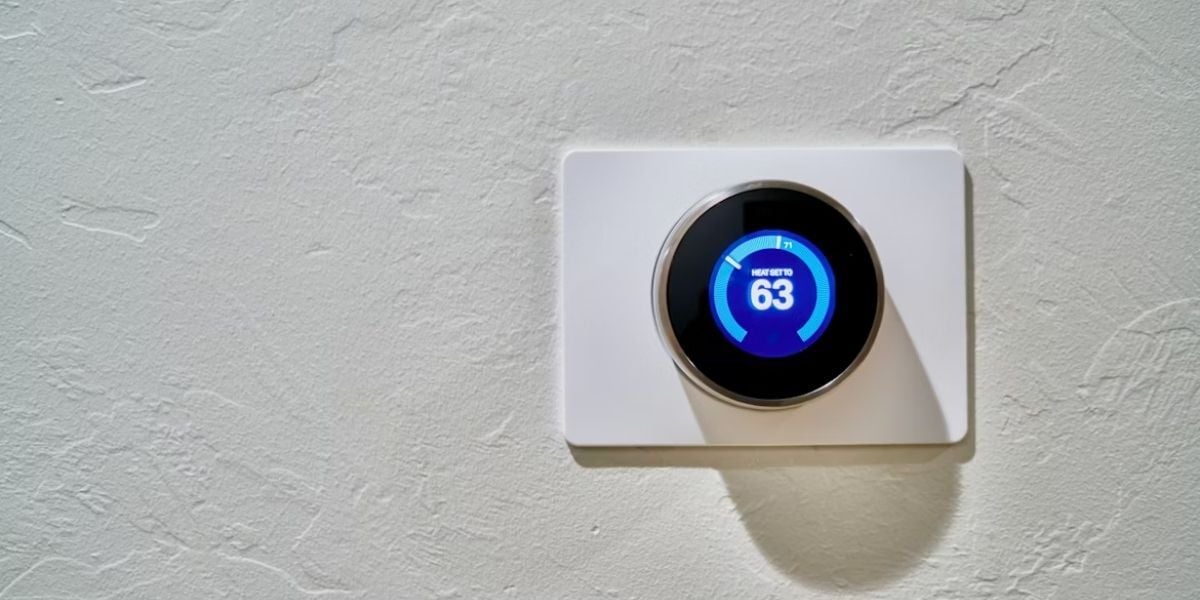
The thermostat says 72°F, yet the room stays stuck at 76°F. Or during heating season, the building never quite warms up. It’s frustrating. If the supply air temperature (SAT) is normal, shouldn’t the room reach the setpoint?
Not always.
At Harold Brothers Mechanical, we’ve helped many facilities troubleshoot this exact issue. When the supply air temperature looks right, but the space won’t stabilize, the problem is usually not the heating or cooling coil. More often, the root cause involves airflow problems, rising space load, control system issues, or duct system faults.
In this article, we’ll explain why this happens and walk through how to diagnose the real problem step by step.
What Is Supply Air Temperature in Commercial HVAC?
Supply air temperature is the temperature of the air leaving your HVAC unit and entering the duct system.
In cooling mode, it is often between 52°F and 58°F. In heating mode, it may be 90°F or higher, depending on the system.
If the SAT (supply air temperature) is within the normal range, that indicates the unit is producing heating or cooling properly.
But making cold or warm air is only part of the job. The system must also move enough of that air into the space.
What Does It Mean to Reach Thermostat Setpoint?
%20(9).jpg?width=283&height=378&name=Untitled%20(768%20x%201024%20px)%20(9).jpg) The setpoint is the temperature set on the thermostat. If the thermostat is set to 72°F, that is the target temperature.
The setpoint is the temperature set on the thermostat. If the thermostat is set to 72°F, that is the target temperature.
When the space does not reach the setpoint, it means the HVAC system is not removing enough heat in summer or adding enough heat in winter.
Even with normal supply air temperature, something may be stopping the system from delivering full capacity to the room.
Low Airflow Problems
One of the most common reasons a space won’t reach setpoint is low airflow.
You can have perfectly cold air, but if not enough of it is moving into the room, the space will not cool down.
Cooling depends on both temperature and airflow. If airflow drops, total cooling drops too.
Low airflow can happen for many simple reasons. Dirty filters can block air movement. Dampers may be closed. A fan belt could be loose. In variable air volume (VAV) systems, the box serving the space may not be open fully.
When airflow is reduced, the supply air temperature may still look normal at the unit. But the room is not getting enough conditioned air to change the temperature.
High Space Load Issues: Your HVAC System Can’t Keep Up
%20(10).jpg?width=302&height=403&name=Untitled%20(768%20x%201024%20px)%20(10).jpg) Another common issue is high load inside the space.
Another common issue is high load inside the space.
“Load” means the amount of heat that must be removed or added. If the load increases, the system has to work harder.
Maybe more people are using the space now. Maybe new computers or machines were added. Large windows may allow sunlight to heat the room. Doors could be opening often. Outside air dampers might be allowing too much warm air into the building.
If the load increases but the system size stays the same, the space may never reach the setpoint. The supply air temperature can look perfect, but the system may not be able to keep up.
Issues With Your Thermostat or Sensor
Sometimes the issue is not airflow or load. It is the temperature reading itself.
If the thermostat is installed in the wrong location, it may not reflect the true space temperature. For example, it might be near a heat source or in direct sunlight. It could also be too close to a supply vent.
Sensors can also drift out of calibration over time. If the thermostat reads 74°F when the room is actually 70°F, the system may shut off early.
Before making major adjustments, always verify the space temperature with a reliable thermometer.

Duct Problems
%20(11).jpg?width=318&height=424&name=Untitled%20(768%20x%201024%20px)%20(11).jpg) Ductwork carries conditioned air from the unit to the space. If the duct system has leaks or damage, air may never reach the room.
Ductwork carries conditioned air from the unit to the space. If the duct system has leaks or damage, air may never reach the room.
A disconnected duct in the ceiling can dump cold air into a space. Poor insulation can allow air to warm up before it reaches the diffuser.
From the unit’s point of view, everything looks fine. The supply air temperature is correct. But the room is not receiving the full benefit.
Issues With The Control System
Modern HVAC systems often rely on building management systems (BMS). These controls manage airflow, dampers, and setpoints.
If a VAV box is stuck at minimum airflow, the space will not cool properly. If a damper actuator fails, airflow may stay low. If static pressure settings are incorrect, some zones may be starved for air.
In these cases, the air handler may show a normal supply air temperature. But the problem is happening downstream in the control system.
How to Troubleshoot This Issue
%20(13).jpg?width=289&height=386&name=Untitled%20(768%20x%201024%20px)%20(13).jpg) When a space won’t reach the setpoint, but the supply air temperature looks normal, follow a simple order.
When a space won’t reach the setpoint, but the supply air temperature looks normal, follow a simple order.
First, confirm the actual space temperature with a handheld thermometer. Next, check the airflow to the space. Look at filters, dampers, and fan operation. After that, consider whether the load has changed. Finally, review the control system and zone operation.
Avoid replacing coils or major components too quickly. In many cases, the root cause is something simple.
Why This Matters for Your Commercial Building
When a space doesn’t reach setpoint, comfort complaints increase. Equipment runs longer, energy costs go up, and maintenance teams may waste time fixing the wrong thing.
Normal supply air temperature does not mean the space is receiving enough heating or cooling. You need the right air temperature and the right airflow, along with accurate sensors and proper controls.
At Harold Brothers Mechanical, we help building owners and facility managers solve issues like this by looking at the full system, not just the unit. When you understand airflow, load, and controls, the real problem becomes much easier to find.
If you’re still unsure about the best way to upgrade your HVAC controls, the next step is understanding your options. Read our article, “Controls Upgrade Options: Standalone Controls vs. BMS Integration,” to explore the key differences between BMS systems and standalone controls and gain the clarity you need to choose the right solution for your building.
Topics: