
How Preventative Maintenance Keeps Your HVAC System Running Its Best
December 10th, 2025
3 min read
By Chris Cason
If you manage a commercial building in Massachusetts, you already know how much strain your HVAC system takes every season. One month, it’s battling humidity, the next one, dealing with freezing temperatures and constant heating demands. Somewhere in between, tenants start asking why a certain room feels “off,” or why the system seems to be running nonstop.
Most HVAC problems don’t show up overnight. They develop slowly, a clogged filter here, a dirty coil there, a thermostat drifting out of calibration, until one day the building stops heating or cooling the way it should. That’s when energy bills spike, comfort drops, and equipment starts wearing out far sooner than it should.
At Harold Brothers Mechanical Contractors, we see this pattern in nearly every type of commercial space. The buildings that stay comfortable and efficient year-round have one thing in common: consistent, proactive preventative maintenance.
Below, you’ll learn why preventative maintenance is one of the smartest investments a building owner can make and how it keeps your HVAC system performing at its best.
Why Your Commercial HVAC System Isn't Giving Peak Performance
Your HVAC system works quietly in the background, but its components take a beating. Dust, weather, vibration, long runtimes, and changing building needs all affect performance.
Here are the most common reasons systems lose efficiency:
1. Dirt and Debris on Coils
Dirty coils are one of the biggest sources of wasted energy. When dust builds up, the system has to work harder to move heat in and out of the building. That means higher utility bills, slower temperature recovery, and unnecessary strain on compressors and motors.
2. Clogged or Neglected Filters
A filter that has not been changed quickly turns into an airflow problem. Poor airflow makes rooms feel uneven, forces equipment to run longer, and can even cause freezing or overheating inside the unit.
3. Thermostats That Drift Out of Calibration
It only takes a few degrees of error to throw off comfort. A misreading thermostat sends mixed signals, causing the system to cycle too often or not enough.
4. Wear and Tear on Belts, Motors, and Electrical Components
Small mechanical issues usually show up long before the equipment fails. Loose belts, weakening capacitors, and worn contactors can quietly reduce efficiency for months.
5. Unbalanced or Dirty Ductwork
Dust buildup, minor leaks, or airflow imbalances make it harder for conditioned air to reach the areas that need it most.
Without regular check-ins, these issues compound and that’s when buildings experience the big, expensive failures.
What Preventative Maintenance Actually Does for Your HVAC System
The practical benefits building owners notice immediately
A consistent maintenance program keeps performance from drifting, reduces emergency calls, and extends the life of your equipment. Here’s how:
Improves Efficiency and Lowers Energy Costs
Clean equipment simply works better. After coil cleaning, filter changes, and tune-ups, many buildings see 5% to 20% reductions in energy usage.
Reduces Equipment Strain
When airflow and components are restored, your system doesn’t have to overwork. That means fewer mid-season breakdowns and a longer lifespan for expensive equipment.
Keeps Temperatures More Consistent
A well-maintained system balances airflow more effectively and recovers temperatures faster in extreme weather.
Protects Manufacturer Warranties
Many equipment manufacturers require documented maintenance to keep warranties active.
Identifies Problems Before They Become Emergency Calls
Technicians catch failing parts early — often months before they cause downtime.
Helps You Predict Costs and Budget Accurately
When equipment is steady and predictable, so are your expenses. Preventative maintenance uncovers what’s coming, not just what’s happening today.
What a Professional Preventive Maintenance Visit Includes
Common steps technicians take to restore optimal performance
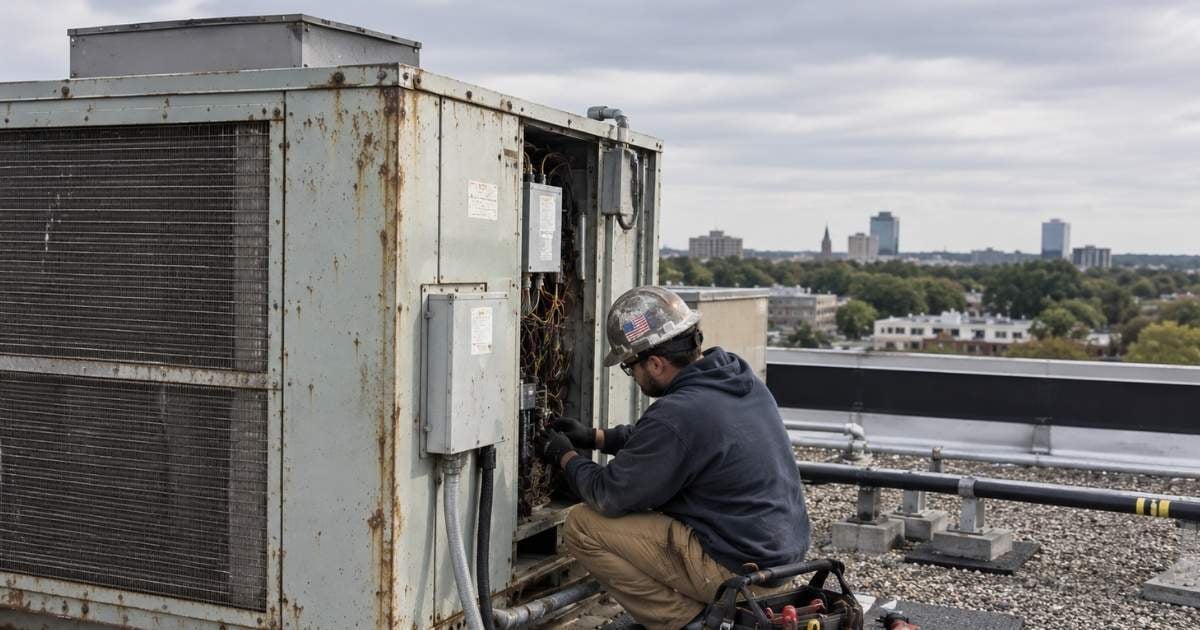
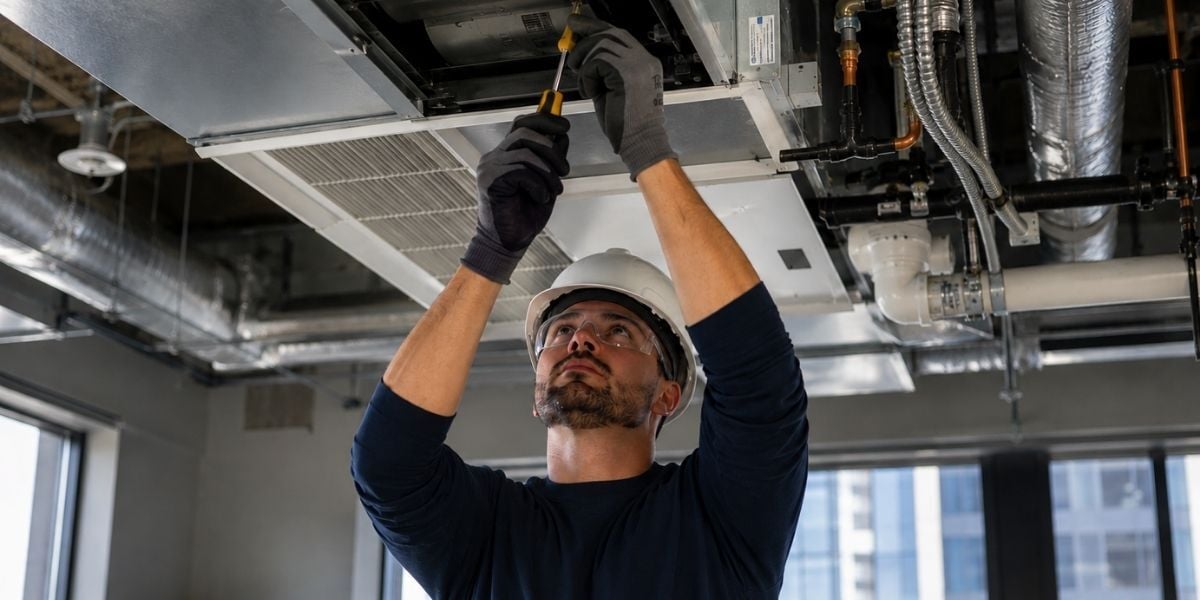
During a typical PM visit, a technician will:
- Clean condenser and evaporator coils
- Replace or clean filters
- Inspect belts, motors, and bearings
- Check refrigerant levels and pressures
- Test electrical components and safety controls
- Verify thermostat accuracy
- Inspect ductwork and airflow
- Document findings and report potential issues
Even small adjustments during these steps can make a noticeable difference in comfort and system performance.
The Real Cost of Skipping Maintenance
Where problems tend to show up first
Buildings without preventative maintenance often experience:
- Higher utility bills
- Frequent hot and cold spots
- Shorter equipment lifespan
- More emergency calls
- Early component failures
- Increasing tenant complaints
Most of these issues develop quietly over months, not in a single dramatic failure. By the time they’re obvious, the building is already paying the cost.
When to Bring in a Commercial HVAC Professional
A professional technician doesn’t just clean equipment. They identify patterns, test performance, and spot problems you can’t see from outside the unit.
Working with a licensed HVAC partner provides:
- Faster, accurate troubleshooting
- Detailed reports you can reference later
- Recommendations based on your specific system
- Predictable pricing and clear expectations
- Priority response if you have a Preventative Maintenance contract
PM programs can range from $2,000 to $100,000+ depending on the size of your building and equipment. Most office buildings fall at the lower end of that scale.
Keep Your Commercial HVAC System at Its Best Year-Round
HVAC systems don’t slowly improve on their own; they slowly drift out of efficiency. Filters clog, coils collect dust, thermostats slip out of calibration, and parts start wearing down long before anyone notices a problem. Preventative maintenance resets your system before those small issues turn into temperature complaints, rising energy bills, or mid-season breakdowns.
If your building has been dealing with inconsistent temperatures, a spike in costs, or more service calls than usual, maintenance is almost always the missing piece. A proactive plan makes the system more predictable, keeps equipment healthier, and helps your building stay more comfortable throughout the year.
Learn how long a preventative visit will take, and what exactly happens at your visit. It explains the ideal schedule for heating and cooling equipment, seasonal considerations, and what most local buildings actually need:
At Harold Brothers Mechanical Contractors, we help offices and commercial properties across New England stay ahead of issues before they turn into emergencies. When you’re ready for consistent performance, instead of constant surprises, our team is here to help.
Topics: