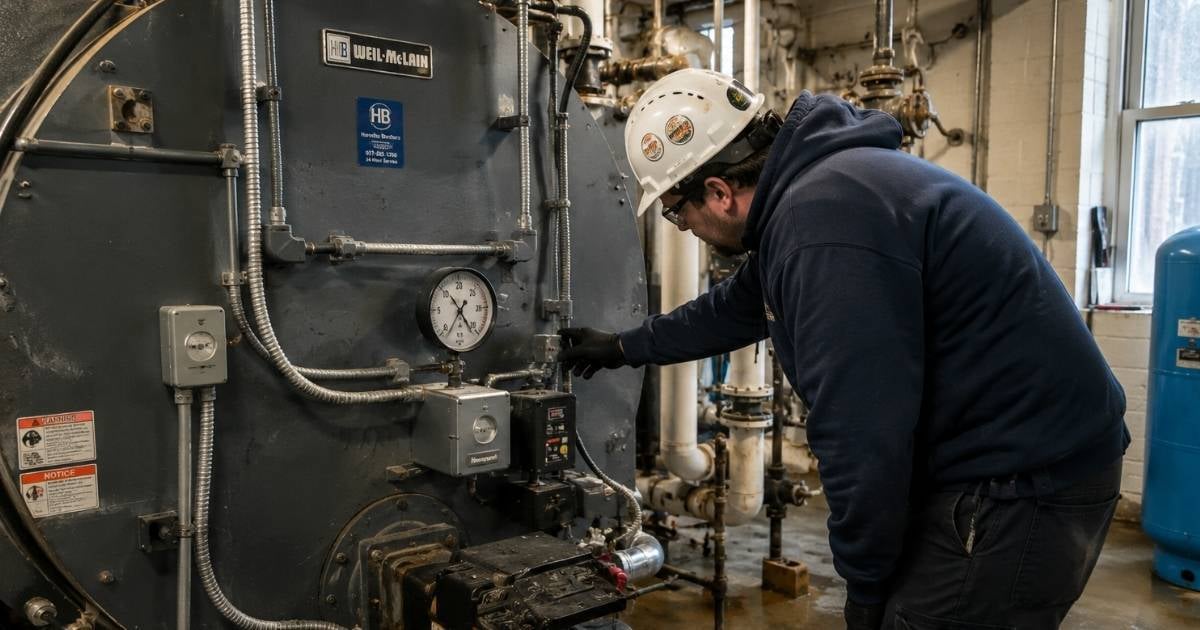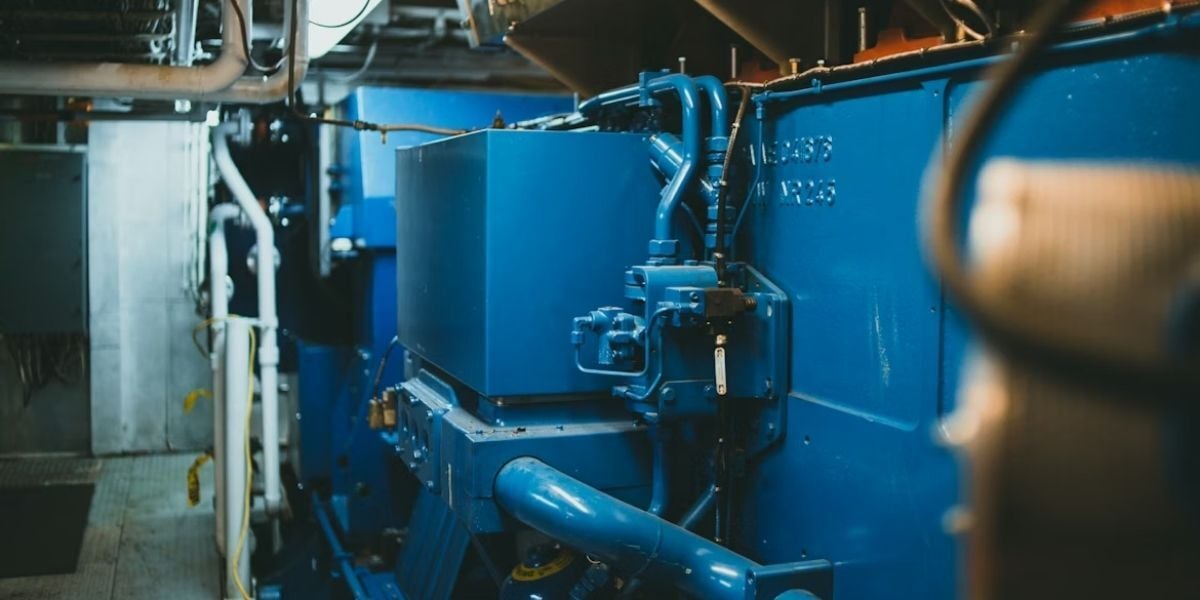

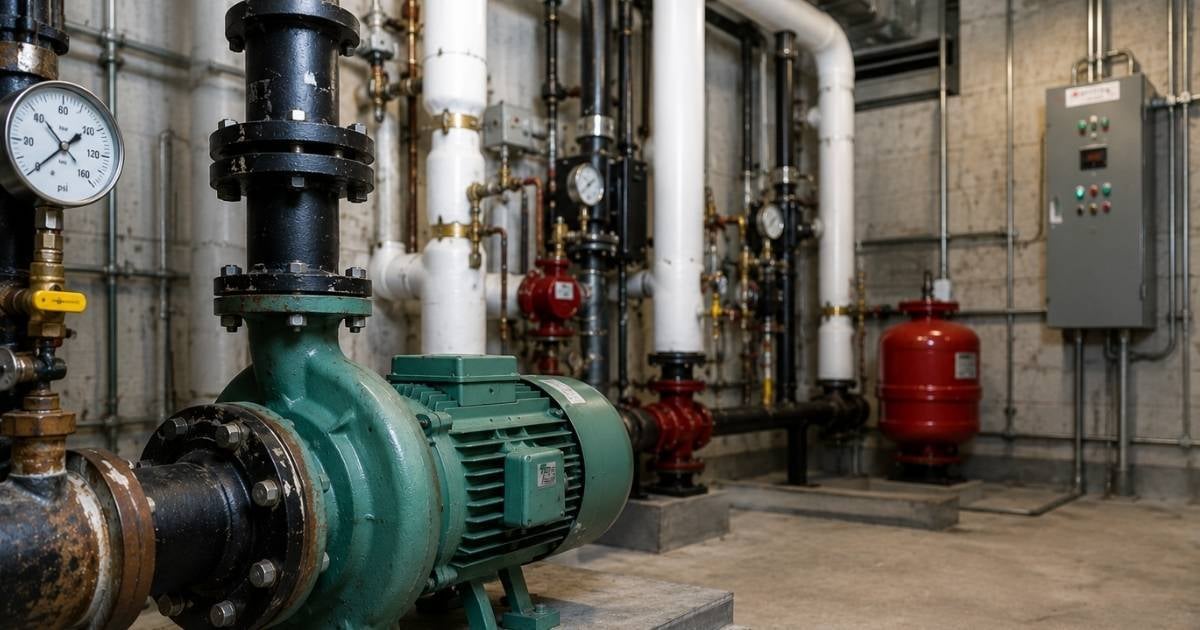
If your building’s heating pump is getting loud, it is not something to ignore. That sound is your system telling you something is wrong. If you wait too long, it usually turns into a much bigger and more expensive problem.
At Harold Brothers Mechanical, we see this all the time across Massachusetts, especially in older buildings along the South Shore and Greater Boston. A pump starts with a slight hum or vibration. Then it turns into knocking, grinding, or whining. By the time someone calls, the system is already damaged.
In this article, you will learn what causes heating pump noise, what each sound usually means, and what you can do to fix it before it turns into a full system failure.
What Does a Circulating Pump Actually Do?
If your building’s heating pump is getting loud, it is important to understand what it does. In most commercial systems, this pump is called a circulating pump. It moves hot water through your building so each space stays comfortable and balanced.
In a properly operating system, you should barely notice it. These pumps are designed to run quietly in the background. When you start hearing them, it usually means the system is no longer operating the way it should.
Why Is My Commercial Heating Pump Making Noise?
1. Air in the System
Air trapped in a hydronic system is one of the most common causes of noise. It often sounds like bubbling or gurgling moving through the pipes.
This tends to show up after system repairs, seasonal startups, or in older systems that do not have proper air elimination. Around New England, we see this every fall when systems are turned back on after sitting idle.
We worked with a strip mall in Taunton where tenants started complaining about inconsistent heat and a “water rushing” sound in the walls right after the system was turned on for the season. The issue was not the boilers or the pumps themselves. Air had built up in the system during the offseason. Once we properly bled the system and corrected the air elimination, the noise disappeared and the heat balanced out across all the units.
Beyond the noise, air reduces efficiency and forces the pump to work harder than necessary.
2. Pump Is Oversized or Undersized
This is a design issue that shows up as a performance problem.
An oversized pump pushes water too fast through the system. This creates vibration, pipe noise, and unnecessary wear. An undersized pump struggles to move enough water. This leads to overheating and internal stress.
Either way, the system falls out of balance, and noise becomes one of the first warning signs.
3. Worn Bearings
If the noise sounds mechanical, like grinding, humming, or a steady vibration, worn bearings are usually the cause.
Bearings break down over time, especially in systems that do not receive regular maintenance. Once they start to fail, the pump becomes less stable and more prone to failure. This is one of those issues that does not fix itself. It only gets worse.
In many cases, by the time a pump gets loud enough to notice, internal damage has already started, which is why waiting usually turns a small fix into a full replacement.
4. Dirt and Debris in the System
In older commercial buildings, dirty system water is extremely common.
Over time, rust, sediment, and scale build up inside the piping and equipment. That debris can clog the pump, restrict flow, and create vibration.
We see this frequently in cities like Boston, Quincy, and Brockton where systems have been in place for decades without proper cleaning or water treatment.
5. Cavitation (One of the Most Damaging Issues)
Cavitation is one of the more serious problems and one of the easiest to recognize once you know what to listen for.
- Sounds like gravel or marbles inside the pump
- Happens when system pressure drops too low
- Creates collapsing vapor bubbles that damage internal components
- Leads to rapid wear of the impeller and internal surfaces
This is not just a noise issue. Cavitation can destroy a pump quickly if it is not addressed.
How Do You Fix a Noisy Heating Pump?
Start With the Simple Fixes
Some issues can be resolved quickly if caught early:
- Bleed air out of the system
- Make sure valves are fully open
- Tighten any loose components
- Clean strainers and filters
If the noise just started, these are the first places to look.
Adjust Flow and System Performance
When the issue is related to sizing or flow, adjustments can make a big difference. Slowing the pump down or controlling flow more accurately can reduce stress on the system and eliminate noise.
In many commercial buildings, adding a variable frequency drive, or VFD, allows the pump to match demand instead of running at full speed all the time. That alone can solve both noise and efficiency problems.
Repair or Replace Worn Components
When internal parts begin to fail, repairs become necessary. Bearings, seals, and motors all wear down over time, especially in systems that run year round.
At this stage, the decision usually comes down to repair versus replacement. Waiting too long often removes that choice and forces a full replacement.
Clean the System
If debris is the issue, the system needs to be cleaned, not just patched.
- Flush the system to remove buildup
- Install filtration or dirt separators
- Treat the water to prevent future contamination
Without this step, the problem will continue to come back.
Fix the Root Cause (Not Just the Noise)
This is where most buildings fall short.
Noise is a symptom, not the problem. If the underlying issue, whether it is poor design, lack of maintenance, or system imbalance, is not addressed, the noise will return.
That is why quick fixes often turn into repeat service calls.
Preventative maintenance changes that by catching issues early, before they become noticeable or disruptive.
What Should You Do If Your Heating Pump Is Making Noise?
Circulating pump noise is not just an annoyance. It is a clear signal that something in your system needs attention, whether it is air, wear, sizing, or contamination.
The buildings that stay quiet are the ones that stay maintained. The ones that wait are the ones that deal with breakdowns.
At Harold Brothers Mechanical, we help commercial building owners across Massachusetts stay ahead of issues like this. If your system is already making noise, the next step is understanding what is causing it and how to prevent it from happening again.

Topics: