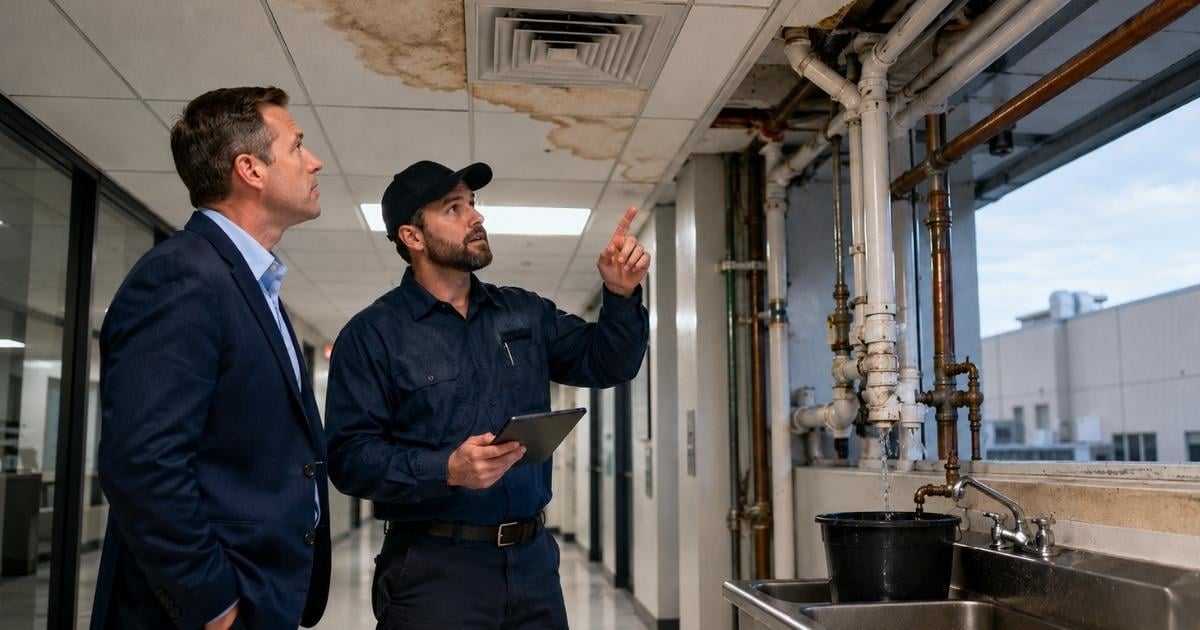

If you manage an older commercial building, you’ve likely noticed a pattern: HVAC complaints increase even though the system is still running.
At first, the issues seem minor. One tenant says their office feels too warm in the afternoon. Another says it takes too long to heat up in the morning. A conference room starts feeling stuffy during meetings.
Over time, what was once a reliable system starts needing more attention. Comfort becomes harder to maintain, and the pressure builds to fix issues before they affect tenant satisfaction, productivity, or even lease renewals.
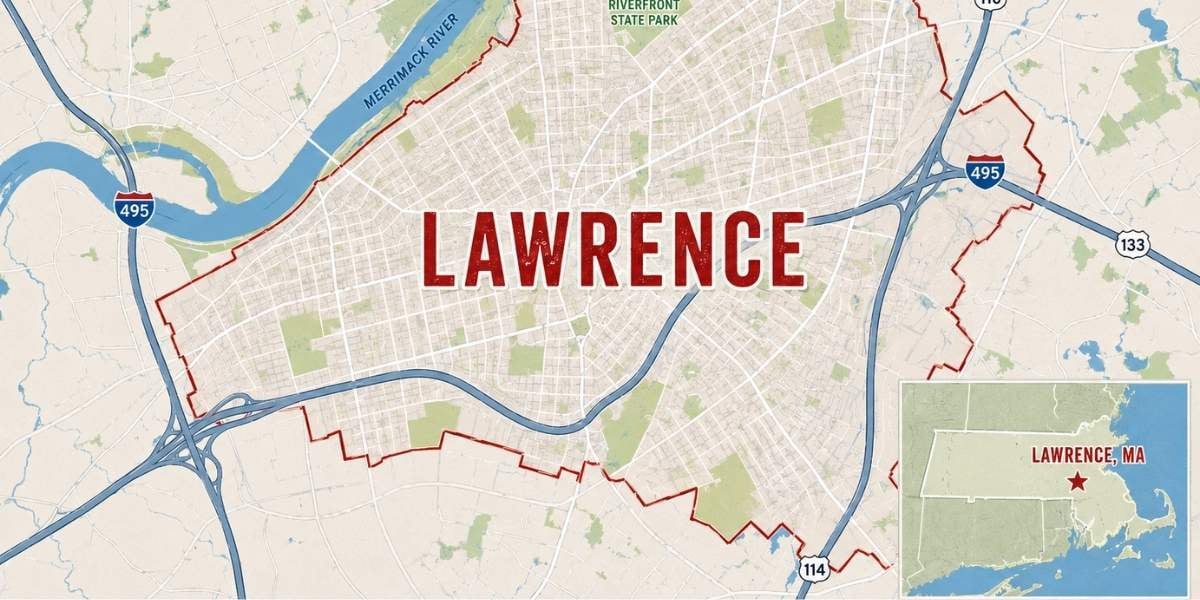
At Harold Brothers, we see this across office buildings throughout Massachusetts, New Hampshire, and Rhode Island. Most of the time, nothing is actually “broken.” Instead, it’s a series of small changes that build up and slowly reduce system performance.
In this article, we’ll explain why HVAC systems in older buildings begin to struggle, how those changes affect comfort, and what’s really driving the increase in tenant complaints.
Why Do Commercial HVAC Systems Lose Performance Over Time?
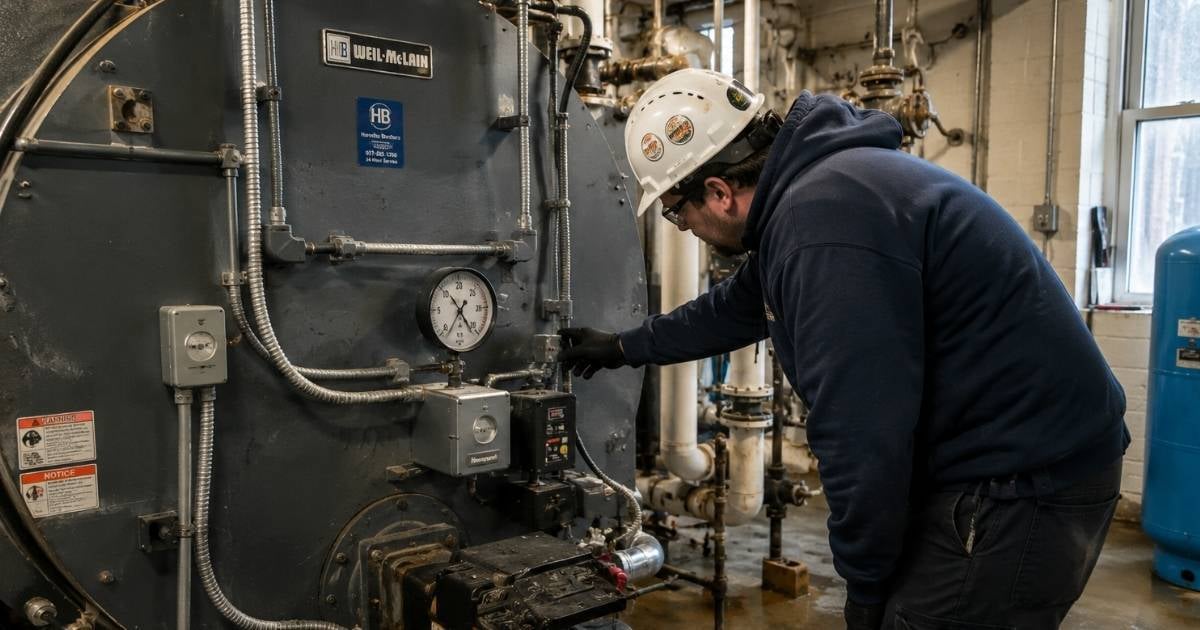
Commercial HVAC systems rarely fail all at once. Instead, performance declines gradually as components wear down and efficiency drops, which aligns with guidance from ASHRAE on HVAC system performance and maintenance.
Here’s what we actually see in the field after years of run time:
- Motors lose strength and can’t move air the way they used to
- Belts stretch or slip, which quietly reduces airflow
- Coils get dirty, making heat transfer less effective
- Electrical components become less consistent over time
- Sensors drift and start reading temperatures slightly off
None of these issues on their own seem serious. That’s the problem.
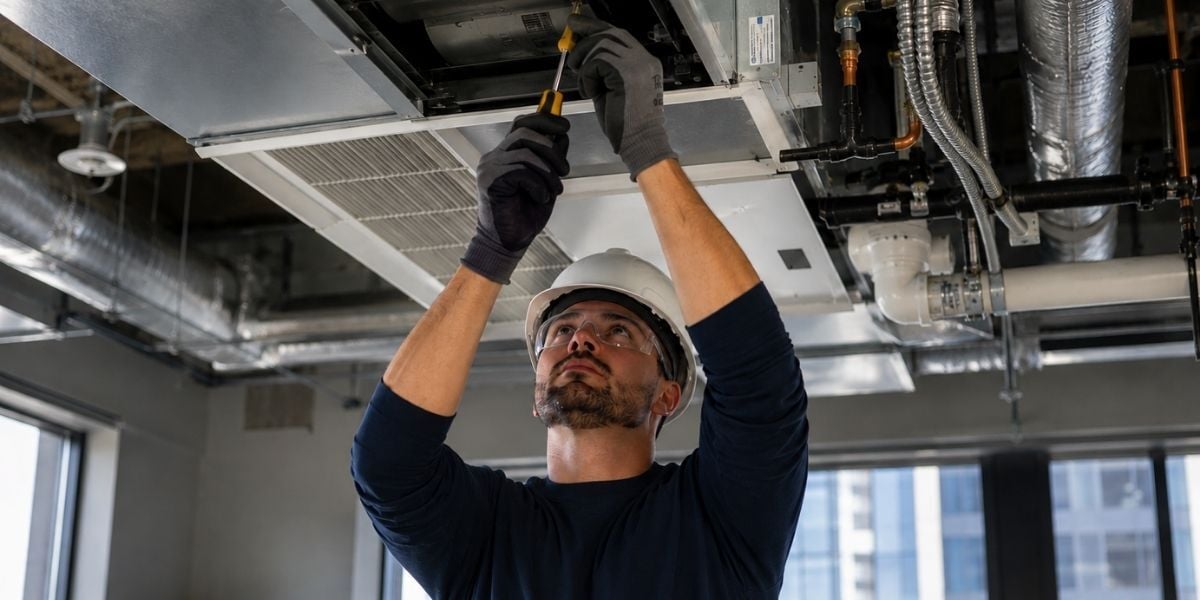
They’re the exact types of issues addressed during what gets checked and cleaned during HVAC maintenance, but when they go unchecked, they stack up.
Over time, this leads to uneven temperatures, longer run times, and higher energy use, which is consistent with findings from the U.S. Department of Energy on HVAC efficiency and energy consumption. Some areas of the building may start to feel warmer or cooler than they used to, even though the system appears to be operating normally.
This is usually the point where complaints start. The system is still running, but it’s no longer performing the way it once did.
How Does Wear and Tear Affect HVAC Comfort?
As HVAC systems age, airflow is usually the first thing to suffer.
Filters clog. Dampers stop moving the way they should. Small mechanical issues start slowing things down.
None of this shuts the system off, but it changes how air moves through the building.
And airflow is everything when it comes to comfort.
When airflow becomes uneven, some areas get too much conditioned air while others barely get enough.
That’s why many comfort complaints in older buildings aren’t caused by broken equipment; they’re caused by airflow problems that build up quietly over time.
Why Do Older Buildings Experience More Airflow Problems?
Airflow problems tend to increase as buildings age, but they usually come from a few specific causes that build up over time.
Changes to the Building Layout
As spaces are reconfigured, airflow paths change. Walls get added, offices are divided, and open areas are enclosed.
The system was designed for a different layout. Once that changes, air doesn’t always reach the areas it needs to.
Ductwork Wear and Leakage
Duct systems don’t stay sealed forever. Joints loosen, small leaks develop, and conditioned air never makes it where it’s supposed to go.
Even minor leakage can reduce airflow enough to create noticeable comfort issues, which can contribute to why the air in a commercial building may feel heavy or uncomfortable.
Increased Demand on Older Systems
Most older systems are now handling more than they were designed for.
More people, more equipment, longer hours, it all adds up.
At that point, it’s not surprising when you start noticing your commercial HVAC system running longer just to keep up.
When these factors combine, airflow becomes uneven, which is one of the most common reasons complaints increase.
Can Tenant Changes Affect HVAC Performance?
Yes, and it happens all the time.
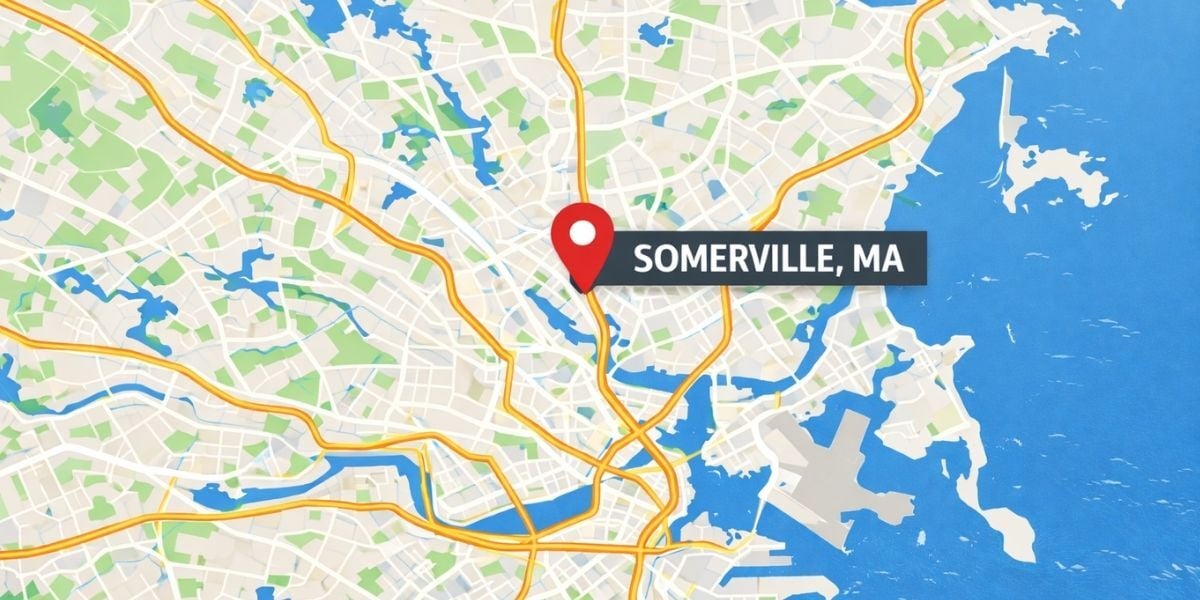
We worked with an office in Somerville that changed from an open layout to smaller offices and added more computers and an IT closet. Soon after, complaints started.
Some rooms felt warm and stuffy. Others felt too cold.
The HVAC system was not broken. The space had simply changed.
New walls blocked airflow, and extra equipment added heat. The system was still doing its job, but it was no longer set up for the new layout.
This is common in older buildings. As tenants grow and make changes, HVAC systems can struggle to keep up, leading to uneven temperatures and more complaints.
Why Do HVAC Complaints Seem to Appear Gradually?
Many property owners notice that HVAC complaints increase slowly rather than all at once.
A building may operate smoothly for years. Then, occasional complaints begin to appear, often tied to common HVAC issues that lead to tenant complaints.
Usually, it’s not one thing. It’s a combination:
- Slight performance loss in the equipment
- Airflow changes after renovations
- Increased occupancy or usage
None of these stand out on their own. Together, they start affecting comfort across the building in a noticeable way.
Understanding Why HVAC Complaints Increase in Older Buildings
As buildings get older, HVAC complaints often increase. This does not always mean something is broken. It usually means the system and the building have changed over time.
If complaints are rising, the goal is not just to fix one issue. It is to understand how the full system is performing today.
Most problems are not solved with a quick repair. They often involve airflow, system balance, and controls working together.
The next step is understanding why some buildings experience more HVAC complaints than others. We break down the specific building conditions that lead to these patterns and what to look for in your own property.
At Harold Brothers, we help commercial property owners across New England find the root of these issues and take practical steps to improve comfort and reduce complaints.
Topics: