
If your commercial boiler keeps losing pressure, adding more water is not fixing the real problem. A commercial boiler should keep a steady pressure while it runs. If the pressure keeps dropping, something in the heating system needs to be repaired.
At Harold Brothers Mechanical Contractors, we've helped businesses across Massachusetts, Rhode Island, and New Hampshire fix commercial boiler problems for decades. We've worked on schools, office buildings, hospitals, and factories. In many cases, low boiler pressure is not the real problem. It is usually a sign that something else in the heating system is wrong.
In this article, you'll learn why boiler pressure drops, the most common causes, what warning signs to look for, and when it's time to call a commercial HVAC technician before a small problem turns into an expensive repair.
What Does Boiler Pressure Do?
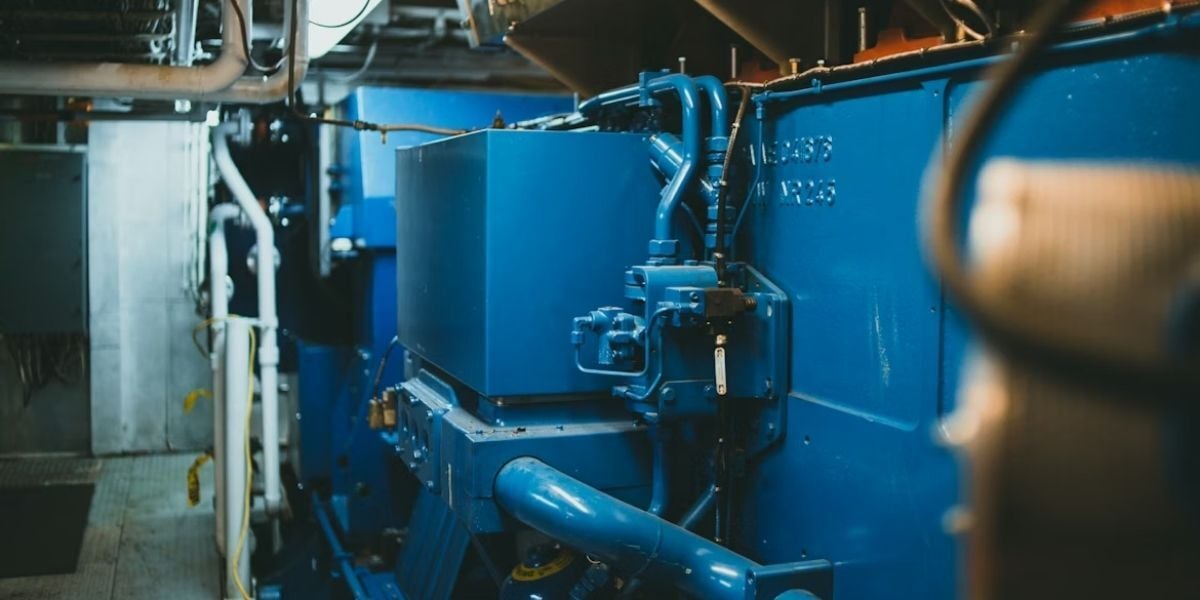
A commercial boiler uses water pressure to move hot water through your building. That hot water heats rooms and keeps the building comfortable. If the pressure gets too low, the water cannot move through the system the way it should. This can cause:
- Cold rooms
- Noisy pipes
- Air trapped in the system
- Boiler shutdowns
A small change in pressure while the boiler heats up is normal. But if the pressure keeps dropping, something is wrong.
Why Does a Commercial Boiler Keep Losing Pressure?
A commercial boiler is a closed system. That means the same water should stay inside the pipes and boiler. If the pressure keeps falling, water is escaping somewhere or one of the boiler parts is not working correctly.
Here are the most common reasons a commercial boiler loses pressure.
|
Possible Cause |
Common Signs |
How Serious Is It? |
Can You Handle This In-House? |
|
Hidden water leak |
Pressure slowly drops over several days |
Moderate to High |
Sometimes. Visible leaks may be repaired by maintenance staff, but hidden leaks usually need professional leak detection. |
|
Pressure rises while heating, then drops after cooling |
High |
Usually no. Most expansion tanks need to be replaced by a commercial HVAC technician. |
|
|
Leaking pressure relief valve |
Water near the drain pipe or floor drain |
High |
Usually no. The valve or another part of the system may need repair. |
|
Air trapped in the system |
Gurgling pipes, cold spots, noisy pumps |
Moderate |
Sometimes. Removing air may help for a short time, but the real cause should still be found. |
|
Faulty automatic fill valve |
Pressure goes up and down often |
Moderate |
Usually no. The valve needs testing and adjustment. |
|
Internal boiler leak |
Pressure drops with no visible leak |
High |
No. A technician should inspect the boiler. |
|
Heat exchanger failure |
Water loss, poor heating, boiler shuts down |
Critical |
No. This is a major repair. |
Let's take a closer look at each one.
What Causes a Commercial Boiler to Lose Pressure?
Several problems can cause boiler pressure to drop. Some are easy to spot, while others are hidden inside the heating system.
Hidden Water Leaks
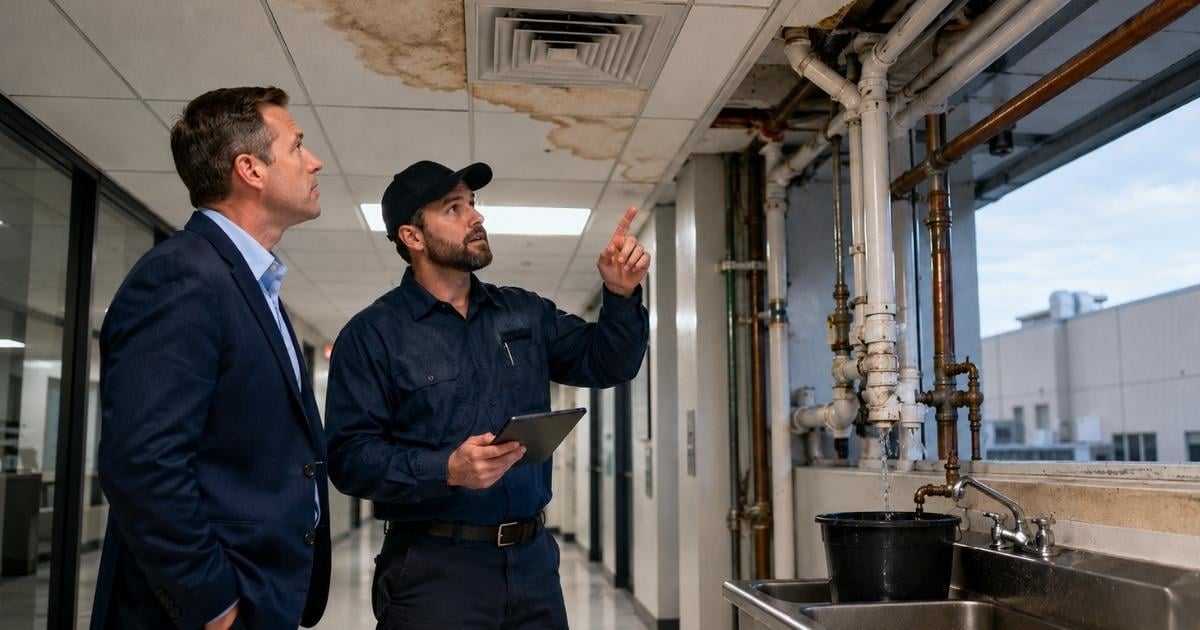
The most common cause is a small water leak. Leaks can be above ceilings, behind walls, under floors, or inside mechanical rooms. Even a tiny leak can slowly lower the pressure over several days without leaving puddles or water stains.
Commercial Boiler Pressure Loss in Action
A medical office building in Massachusetts had boiler shutdowns almost every Monday morning during the winter. The maintenance team kept adding water to bring the pressure back up, but the problem kept coming back.
When technicians inspected the system, they found a slow leak above a suspended ceiling. The water evaporated before anyone noticed it. After the leak was repaired, the boiler held the correct pressure and the shutdowns stopped.
Failed Expansion Tank
The expansion tank gives heated water extra room as it expands. If the tank fails, pressure gets too high while the boiler is running and then drops when the system cools down. Many maintenance teams end up adding water again and again without fixing the real problem.
Pressure Relief Valve Problems
The pressure relief valve protects the boiler if pressure gets too high. If the valve no longer seals tightly, it can let small amounts of water escape every time the boiler runs. Because the water often drains into a floor drain, the leak may never be seen.
Problems Inside the Boiler
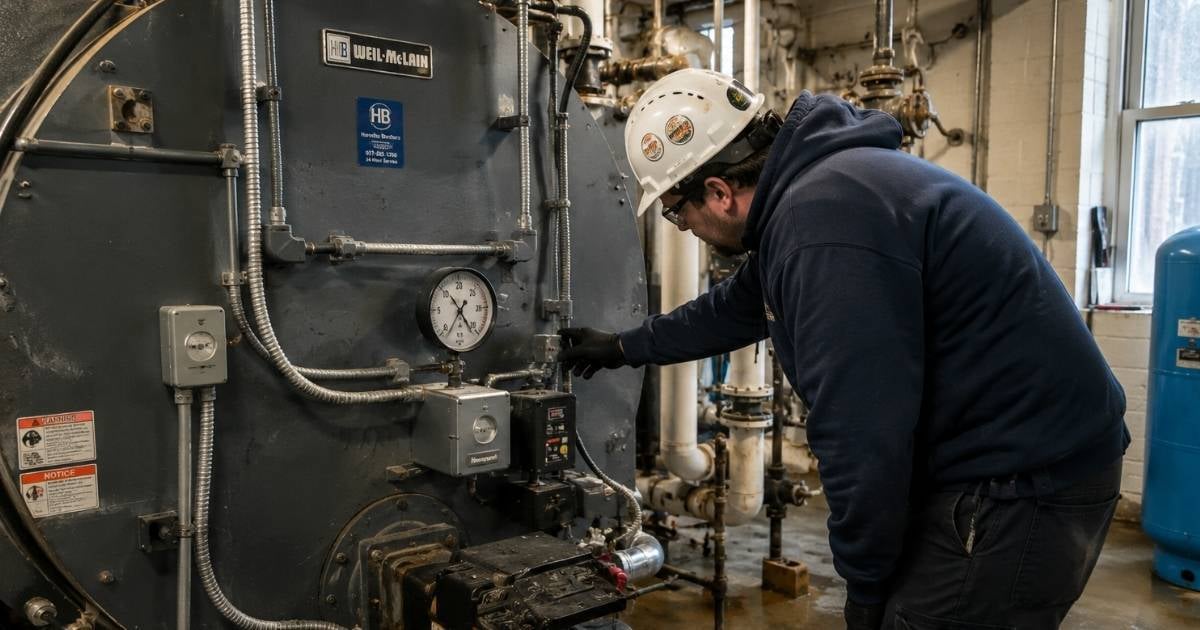
A damaged heat exchanger, worn seals, broken air vents, faulty pressure controls, or a bad fill valve can all cause pressure loss. These problems usually require a trained commercial HVAC technician to diagnose and repair.
What Happens If You Ignore Low Boiler Pressure?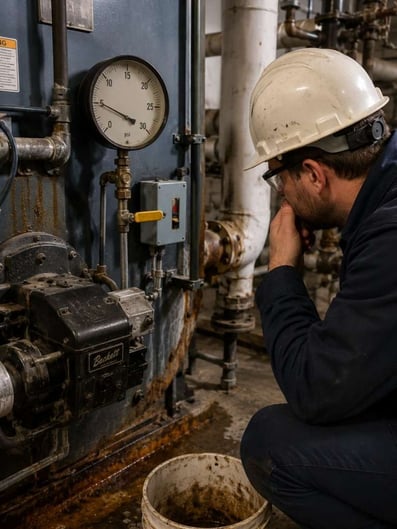
Ignoring low boiler pressure can lead to bigger problems over time. The longer the issue continues, the more damage it can cause.
Poor Heating Performance
Low pressure makes it harder for hot water to move through the building. This can lead to cold offices, uneven temperatures, and more comfort complaints from employees or tenants.
Air Gets Into the System
As pressure drops, air can enter the pipes.
This often causes:
- Gurgling or banging pipes
- Noisy pumps
- Cold spots
- Uneven heating
Removing the air may help for a little while, but the pressure problem will usually come back unless the real cause is fixed.
More Corrosion
Every time you add fresh water, you also add oxygen. Oxygen speeds up rust and corrosion inside pipes, pumps, valves, and heat exchangers. Over time, this can shorten the life of your entire heating system.
When Should You Call a Commercial HVAC Contractor?
If your commercial boiler pressure keeps dropping, it's time to schedule an inspection. You should also have the system checked if your maintenance team has to keep adding water, the boiler shuts down often, or some areas of your building are no longer heating evenly.
These are all signs that there may be a larger problem inside the hydronic heating system. Finding the cause early can help prevent expensive repairs, unexpected downtime, and higher energy costs.
Boiler Pressure Problems Usually Mean Something Else Is Wrong
A commercial boiler should not need to be filled with water over and over again. If the pressure keeps dropping, the system is telling you that something needs attention. Adding water may bring the heat back for a short time, but it does not solve the real problem.
At Harold Brothers Mechanical Contractors, we've helped businesses across New England find and repair the causes of recurring boiler pressure loss. Whether the issue is a hidden leak, a failed expansion tank, a leaking pressure relief valve, or another problem, finding the root cause is the best way to restore reliable heat and avoid bigger repairs later.
If your commercial boiler keeps losing pressure, learning the warning signs can help you catch problems early and reduce unexpected downtime.
To learn more about how commercial hydronic heating systems move water through a building and why system design matters, read our article, Hydronic System Options: Primary-Secondary vs. Variable Primary Flow.
At Harold Brothers Mechanical Contractors, we believe that informed facility managers make better long-term decisions. Understanding how your boiler works can help you spot problems sooner and keep your building running efficiently.

Topics: